


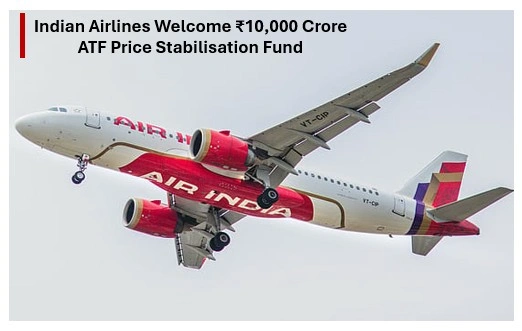
It has been under financial stress for years and the Indian aviation industry has been at the mercy of the vagaries of global oil prices. The government’s recent declaration of a new ₹10,000 crore Aviation Turbine Fuel (ATF) Price Stabilisation Fund has, however, received widespread relief and optimism from the industry. The move has been welcomed by all major carriers including IndiGo, Air India, SpiceJet, etc. who see this as a much awaited financial boost in addressing their single biggest expense.
This fund marks a turning point in what has been a turbulent past for an industry battling razor-thin margins, volatile global crude prices, and stiff competition, and is a step toward structural stability and planning for the long term.
Understanding the Financial Burden of Jet Fuel
The policy announcement has generated overwhelmingly positive feedback from the airline industry because of a distinct cost structure in commercial aviation in India. The cost of jet fuel is a very small portion of an airline’s running cost in most international markets, with about 25%-30% going to fuel costs, yet Indian carriers constantly spend 40%-45% of their total revenues just on jet fuel.
This imbalance is due to high base crude prices, world refining margins and high taxes. ATF is a source of significant central excise duties as well as a highly variable state-level Value Added Tax (VAT) that varies from a nominal 1% for some states that are proactive to as high as 25% to 30% for major metro hubs. The monthly operating costs of Indian airlines have always been difficult to predict because oil prices are so volatile in the world and are sensitive to the geopolitical situation, supply disruptions and oil-producing countries’ production quota.
read more: Nazneen Ansari arrested in Rs 3000 crore Heera Group Investment Scam
How the ₹10,000 Crore Fund Actually Works
In this scheme, Ministry of Civil Aviation, in consultation with the Ministry of Petroleum and Natural Gas, determines a base ‘fair price’ zone for ATF. The fund is triggered by sudden price surges in international crude oil markets like the recent blockade of shipping ports or regional conflicts, raising the price of domestic jet fuel beyond a predetermined “ceiling.” The fund then makes up the shortfall in revenue, shielding airlines from the market shock.
On the contrary, when the crude prices in the world markets fall considerably below the floor price, a small amount of levy is imposed on the sale of fuel amounting to replenishment of the fund corpus. This design is self-sustaining, and while the government will bear the responsibility of safeguarding the aviation ecosystem without having to continuously place an open-ended demand on the national exchequer.
read more: Why did PM Modi ask Indian citizens to recycle gold?
A lifeline to expand the network and fleet deliveries
This stability is expected to change the day to day business models of the airline executives, who have been loud in their expression. Predictability is the top advantage that is touted in all circles. If a management team understands that its biggest expense will be in a foreseeable financial range, they can make much more bold and confident choices about future expansion.
India’s aviation industry is witnessing unprecedented growth in its history. There are hundreds of next-generation aircraft scheduled to be delivered from major manufacturers such as Airbus and Boeing over the next few years, and as carriers need to make sure they know what they are going to be paid for leasing, where to put the aircraft on the ground and what to buy next, they need massive amounts of capital clarity. The stabilisation fund is an appropriate financial cushion to ensure that those expansion plans stay on course.
Moreover, this stability is likely to give a new lease of life to the regional connectivity projects such as UDAN scheme. In past instances, the regional roads between Tier-2 and Tier-3 cities have been the first to be cut when there is a sudden hike in fuel prices, as smaller sizes of traffic on regional roads cannot sustain sudden losses.
The Passenger Perspective: Fare Stability and Transparency
The immediate beneficiaries will be the airlines and fuel suppliers but the ultimate winners will be the common man travellers in India. Buying tickets for India’s airfares has long been a gamble, changing prices as much as they please depending on the price of oil in the world market.
The industry anticipates substantial removal of the “fuel surcharges” that airlines usually impose on tickets during world crises with the ₹10,000 crore fund in place. This is not to say that airfares will become extremely affordable for everyone, but it does guarantee that the ticket pricing will stay consistent, organized and predictable. This price transparency is so vital for ensuring the longevity of the holiday travel market, budgets for businesses and an expanding middle-class that depend on domestic travel for its vital connectivity.
