


The Indian stocks ran up on Friday following a lowering of the benchmark policy rate by the Reserve Bank of India (RBI) by 25 basis points that boosted the stocks of banks, financial, and real estate. The drop in rate – aided by the lowest inflation in decades and a steady forecast – indicated that the central bank will switch to boosting the economy at the end of the year.
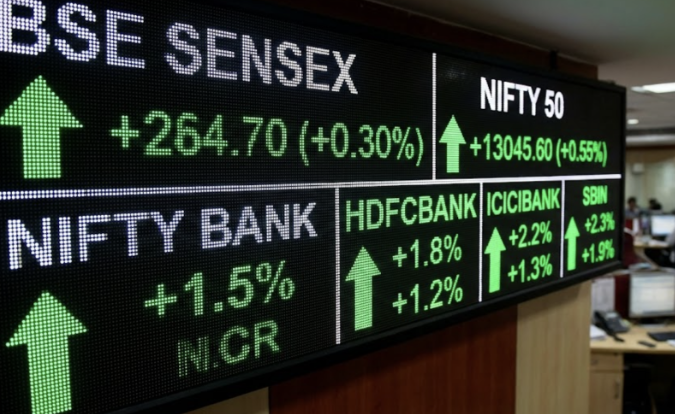
The Nifty 50 increased 0.23 percent to 26,093.55, and the Sensex increased 0.25 percent to 85,479.03 as of 10:47 a.m. IST. The profits follow a week of light profit-taking that had dragged the benchmarks approximately one percent below all-time highs.
Financials Lead Market Gains After Rate Cut
The largest contributors to the increase on Friday were rate-sensitive heavyweight financials.The Nifty financial services index improved by 0.6% and the Nifty bank index improved by 0.4%. State-owned lenders showed performance better than the greater financials as the Nifty PSU Bank Index increased 0.5%.
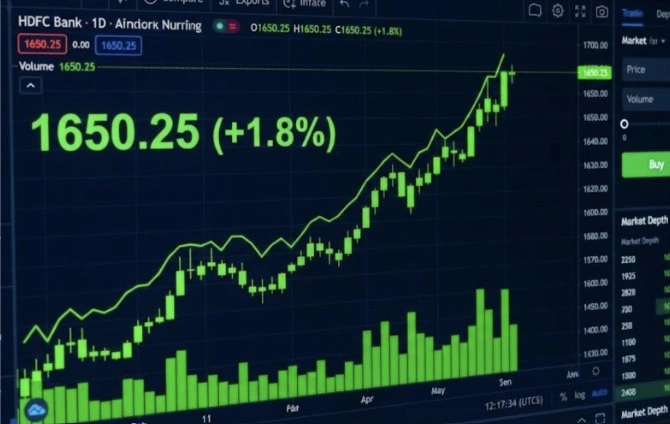
Analysts noted that the strength of the sector was an indication of hope concerning the immediate effects of a reduction in the cost of borrowing. A lowering of the repo rate generally lowers the funding costs of the banks and enhances demand for credit, both on the retail and corporate fronts.
The balance sheets of the non-banking financial companies (NBFCs) are also enhanced by the lower interest rates, allowing them to lend out better. According to market strategists, the private and state-owned lenders are in a good position to enjoy growing loan pipelines in the months to come.
Read also:
- Uday Kotak Welcomes Major Reform Opening Indian Banks
- Why Indians are suddenly crazy about Black Friday deals
- Why is Facebook important for your business
- Rs 90 to a Dollar
Auto and Realty Stocks Rise as Borrowing Costs Drop
The reduced interest rates will tend to boost the demand in the car and property markets since they are both largely dependent on consumer finance.
The Nifty Auto Index advanced by just 0.2% and the real estate stocks leapt, with the Nifty Realty Index advancing 0.7% one of the best-performing sector stocks of the day.
According to property consultants, the rate reduction is an opportune moment for developers and home buyers.
The move taken by the central bank to reduce the repo rate is a clear positive for the real estate industry as we enter the year 2025, according to Anuj Puri, the chairman of ANAROCK Group.
The relocation additionally enhances the value plan of the homebuyers, particularly the ones in the low and middle classes.
The realty companies had already been experiencing good booking momentum in metropolitan markets, and analysts are of the view that the move by RBI will boost the residential demand even more in the early year of 2026.
Broader Market Mixed; Small-Caps Decline
Eight of the 16 sectoral indices, which represent selective purchasing, improved; there was not a general buying spurt.Nevertheless, small-caps performed disastrously. Nifty Smallcap 100 dropped by 0.6 per cent, and Nifty Midcap 100 changed direction.
Analysts explained the weakness by the fact that continued profit-taking and overvaluation issues remained, as smaller firms had sharply recovered over the last few months.
There has been a trend of investors moving into large-cap and stable financial names due to heightened regulation of small-cap froth in the first part of this year.
Rate Cuts Could Trigger a Short-Term Market Rally
Market observers think that the RBI move, coupled with anticipations of a probable U.S. Federal Reserve rate cut next week, may set the stage for a short-term market surge widely known as the Santa Claus rally.
The fall in the rate is also provided by the fact that retail inflation is at the lowest levels in several years, and gives the central bank sufficient space to focus on expansion. Economists indicate that the monetary easing cycle might be taken cautiously till early 2026, provided inflation is kept within the target.
Indian equities reached new lifetime highs last week, driven by strong GDP figures, robust corporate profits, and robust domestic liquidity. As the monetary situation eases, traders are hoping that the interest in the rate-sensitive sectors will revive and there will be an upward movement in the benchmark indices.
Strategists, however, warn that the market’s direction will remain affected by unpredictability in global economic conditions, fluctuations in crude prices, and flows of foreign institutions.
