


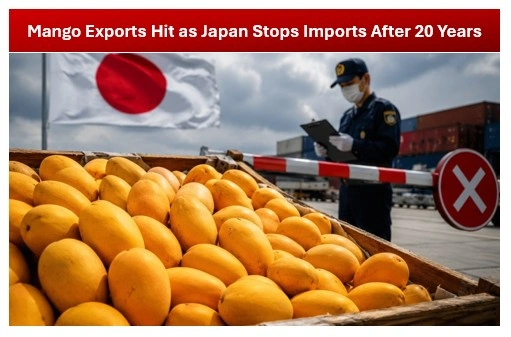
Fresh mangoes from India were suspended from being imported to Japan for this season due to Japan’s implementation of its new visual inspection process for imported mango through fruit fly pest control processes under this new quarantine standard.
According to a recent news release from Japan’s Yokohama Plant Protection Association, the suspension is effective immediately. Indian processors must improve their operational procedures and meet the Japanese quarantine requirements before Japan will reopen the market for mango imports from India.
Top varieties, including Alphonso, Kesar, Langra, and Banganapalli, represent many of India’s finest mango varieties and were shipped at a time of year (approximately April to June) when most mangoes grow and ripen. Mangoes are one of the most highly traded fruits globally, and Japan has been a major market for Indian mangoes for over 10 years.
The suspension affects shipments with inspection certificates issued on or after 25 March 2026, for all shipments originating in India. Any further shipments will be subject to inspection by Japanese authorities at the point of export.
Japan firmly believes that proper pest control and disinfection procedures should be used to prevent the introduction of pestilence, especially fruit fly pests, into Japan via fruits from the exporting country.
According to reports, Japan’s plant quarantine officers inspected Indian mango processing facilities for fumigation and disinfection processes at several locations. Reportedly, Japan’s plant quarantine officers discovered gross deficiencies in operational processes relating to pest control and disinfection processes during the inspection.
A Repeat of History
India has been interrupted from sending mangoes to Japan before, and this isn’t the first time. In 1986, there was a fear of fruit flies getting into Japan from India, so Japan stopped importing mangoes from India all together until the year 2006 when India was able to prove through scientific studies, negotiations, and taking the necessary compliance steps needed to reopen the Indian mango market back up to Japan.
Once Japan did open the Indian mango market back to India (in 2006), many Indian suppliers were able to gradually rebuild their market share with approved Indian varieties from areas such as Maharashtra, Gujarat, Uttar Pradesh, and Andhra Pradesh. In fact, the approved varieties grew to be very popular with Japanese consumers. With Japan now halting imports of Indian mangoes again, Indian exporters are worried about India’s overall export quality monitoring system.
also read: US conducts self defence strikes against Iran
Consequences for Indian exporters
While Japan is not the largest importer of Indian mangoes, it is a premium market for Indian mango exporters and exporters receive better prices in the Japanese-market than any other international market. In fact, industry estimates have estimated that total exports of both fresh and dried mango products from India to Japan were approximately $1.54 million in the fiscal-year ending (2025-26). A large percentage of the total value of exports of dried and fresh mangoes to Japan were from Gujarat’s Kesar mango.
Exporters are now concerned that this suspension of trade will tarnish India’s reputation with regard to being able to send high-quality mangoes to all types of international markets (not just Japan). Some exporters claim the need for a stricter compliance environment and updated treatment systems have created more barriers for exporters. Other exporters believe that the suspension of trade with Japan was the byproduct of operational negligence at the Japanese importer’s treatment plants.
It comes at a bad time because of mango export season, so exporters that are exporting to Japan may suffer losses, cancelled consignments as well as excess stock left over in India.
also read: Donald Trump to Undergo Medical Examination
Mango Industry Facing Pressure
The timing of the Japanese ban is adding additional pressure to an already struggling Indian mango industry. There has been widespread damage to Maharashtra’s Alphonso mango crop this year due to adverse weather caused by El Niño conditions, which some government surveys have estimated at 85-90% crop damage for certain areas.
Additionally, high airfreight rates and shipping delays caused by disruptions have affected exports from India to Gulf countries and other international markets. According to exporters, freight rates have increased substantially, which reduce profit margins and result in shipment delays.
also read: India imposes restrictions on silver imports
Finding a Solution to the Issue
It is anticipated that Indian authorities and exporters will be having discussions with Japanese officials in an attempt to resume shipments as quickly as possible. Experts also suggest that the use of stricter monitoring of quarantine facilities, better documentation and improved treatment standards will all be necessary to regain confidence of Japanese exporters.
Japan only represents a small percentage of India’s total exports of mangoes, but the ban shows the importance of global phytosanitary standards in agricultural trade.
