


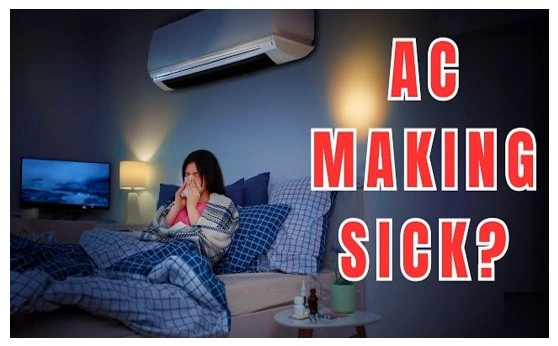
Here are the explanations as to why sleeping in an air-conditioned room may lead to you feeling less than desirable the next day. Chief among them is dehydration. Air conditioning systems work by removing moisture from the air in addition to keeping the air cooler while you sleep. As the level of humidity lowers in your bedroom or home, your body loses moisture at an accelerated rate through both your skin and your breathing system.
Dryness caused by sleeping in an air-conditioned room can contribute to the symptoms of:
- Chapped lips
- Extreme dry throat
- Irritated nasal passages
- Headaches
- Dry eyes
- Mild dizziness or fatigue
When your throat and nasal passages become very dry, they become more prone to the irritation and infection associated with colds, thus you may wake up feeling as though you are coming down with a cold – when in fact the symptoms are due to the lack of moisture in your airways and throat.
If you do not consume enough water during the day prior to sleeping in an air-conditioned room, the likelihood of your feeling these symptoms increases, particularly after several hours of sweating and breathing out excess moisture while sleeping.
Cold Temperatures and Muscle Stiffness
Sleeping in cold temperatures may have an impact on your body’s muscles and joints. Cold air exposure over an extended period will cause the body’s muscles to tighten up a bit due to the cold temperature.
This can lead to:
- Neck pain
- Shoulder stiffness
- Back discomfort
- Aches in joints
- Muscle cramps
Some individuals choose to sleep right under their A/C vent (in direct line of air movement), leaving one side of their body exposed to cold air all night long. Being exposed to the cold air for such long periods can reduce blood flow through certain muscles, and cause a sensation of stiffness and soreness when waking up.
The discomfort that results from cold sleeping conditions usually is more extreme in older adults and people with arthritis or long-term conditions that cause pain.
you may also like:
- What happens when a person sleeps putting the AC on all night?
- Morning routine to follow for a healthy heart
- Mental fitness and neuro-wellness achieving a long term healthy lifestyle
- Common signs that your body is overheating
Respiratory Irritation From A/C
A/C conditions can irritate the respiratory tract in the individual suffering from allergies, asthma, sinusitis, etc. The cold dry air can produce inflammation of the nose and throat linings, thereby producing symptomatology reminiscent of a lower respiratory tract infection.
Common symptoms produced by A/C are:
- Sneezing
- Runny nose
- Blockage of nasal passages
- Cough
- Wheezing
- Pressure in the sinus cavities
For those who transition between hot / wet air outside and cold / dry air indoors will often experience shock-like symptoms to their respiratory systems, and receive increased irritation.
Another consequence of an air conditioner running poorly is that dust, spores, bacteria and allergens will be distributed in the room. When an air conditioning system has dirty filters and ducts, indoor air quality deteriorates and allergies can occur while people sleep.
Neglecting your air conditioner can also lead to a build-up of germs. The dust and moisture that accumulates inside the filters and vents create an environment conducive to the growth of bacteria and mould.
When the air conditioning system is operating dust and spores may be delivered into your lungs while you sleep.
As a result, you may experience:
- Allergic reactions (flare ups)
- Throat irritation
- Persistent coughing
- Sinus infections
- Skin irritations
Cold temperature of air conditioning systems has been blamed for people having trouble sleeping; however, the real cause of their difficulty may be due to poor air quality caused by dirty air conditioners.
In working order, regular maintenance and cleaning can help prevent these symptoms. Change filters and create adequate airflow to promote proper air quality indoors.
Disrupted sleep quality
Cool temperatures generally make sleeping easier; however, when a room’s temperature is too low, sleep may become difficult. When sleeping, your body’s natural temperature will decrease; if the room’s temperature is too low, your body will find it more difficult to get to and maintain this balance.
As a result, you may experience:
- Frequent waking
- Restless sleep
- Shivering
- Fatigue the next morning
Many people unintentionally remove their blankets or change blankets throughout the night as their comfort levels fluctuate, which disrupts their sleep. In some cases, this disruption of sleep may cause feelings of weakness, irritability, or mental fogginess the following day.
Oftentimes, an individual will confuse having bad sleep quality with being sick. Increased sensitivity occurs in certain individuals.
There are certain individuals who are naturally more sensitive to air conditioning. Children, elderly adults, and individuals with respiratory disorders tend to have a higher level of sensitivity towards being indoors in cold temperatures.
For individuals with the following conditions, they may start to notice symptoms after sleeping in an air-conditioned environment:
- Asthma
- Sinusitis
- Allergies
- Migraines
- Arthritis
Individuals who have sensitive skin may feel itchy or irritated from a lack of moisture in the air.
Tips for Sleeping Comfortably with AC
You do not necessarily have to stop using your air conditioner. A few simple modifications can improve the amount of comfort while similarly maintaining the room’s cool temperature.
Helpful tips are as follows
- Maintain a temperature of 24–26 degrees Celsius
- Ensure there is no direct airflow onto your body
- Drink plenty of water prior to sleeping
- Use a humidifier if the air is too dry
- Clean your air conditioning filter regularly
- Use breathable bedding and clothing
- Ensure your room is well-ventilated
These habits will minimize any instances of dryness, stiffness, or respiratory irritation.
Conclusion
Most often, the reason people feel ill after lying underneath an AC unit has to do with several factors: The air is dry, you were exposed to too much temperature variation during sleeping, the AC had poor air quality inside and/or you disturbed your own sleep cycle. Dry air can cause your throat/nose to feel dry, low temperatures can lead to stiff muscles, and also if your AC filter(s) were dirty then allergens/irritants might have been introduced to your sleeping area while using the AC.
To not experience discomfort or poor health from the use of an AC system, proper maintenance of your unit along with ensuring the balanced temperature will enable you to achieve a comfortable sleeping environment that will not make you feel sick upon awaking.
