


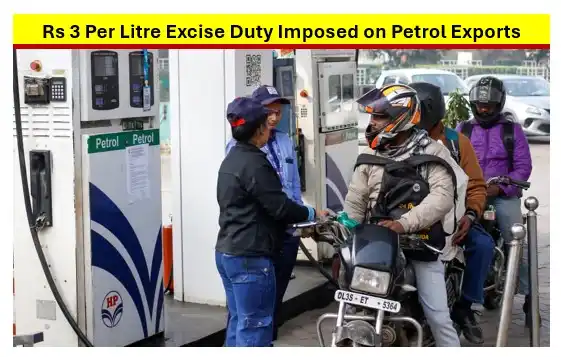
The Federal Government has introduced a tax of three (3) rupees per litre on the export of petrol. This change marks a major shift in the tax system for fuel in India, which has experienced extremely changing global crude oil prices due to increasing geopolitical tensions in West Asia. The new tax system will be effective from May 16, 2026 as stated by the Ministry of Finance.
In conjunction with the new taxes on petrol exports, there were also reductions in the export tax on diesel and aviation turbine fuel (ATF) exports to obtain a balance of domestic fuel availability, export competitiveness of diesel and ATF relative to other nations, and revenue generation.
New Taxation Structure
According to the new notification, the petrol export tax rate is three (3) rupees per litre of petrol exported from India. There is a decrease in the diesel export tax rate from twenty-three (23) rupees per litre to sixteen & a half (16.5) rupees per litre, and the tax rate for the ATF export tax will decrease from thirty-three (33) rupees per litre to sixteen (16) rupees per litre.
Government officials have stated that the new tax rates will remain in effect for two (2) weeks after which the rates will be reviewed based on changes in the international crude oil price and refinement margin.
The Government also confirmed that there have been no changes in the excise rates applied to petrol or diesel that are solely for domestic consumption.
also read: Rupee Hits All-Time Low After PM Modi’s Gold and Fuel Appeal
First Petrol Export Duty Since West Asia Crisis
This action by the Indian government is important because it marks the first time since the start of the West Asia conflict that India has imposed a specific export duty on petrol. In the past, India has maintained zero export duties on petrol while placing higher export taxes on diesel and ATF (Aviation Turbine Fuel).
The present decision to impose a petrol export duty on fuel comes precisely at a time when global crude oil prices are significantly higher than normal levels, mainly because of ongoing tension and disruption of supply from the Middle East. Since India is heavily dependent on imported crude oil to meet its composition, India closely monitors international fuel prices to avoid undue strains on domestic supply and / or retail prices.
also read: Government bans export of sugar
Aim Is to Balance Domestic Supply and Revenue
The government’s objective of imposing a petrol export duty will be to eliminate excessive petrol exports by refiners, and to ensure there is sufficient petrol available for domestic consumption. Additionally, it will allow the government to generate more revenue at a time of strong global crude prices.
Export duties on crude oil and other fuels have been under revision by the government every two weeks based on average international market calculations and the relationship to domestic fuel costs. The original motivation for imposing export taxes was to resolve supply shortages that have resulted from the current West Asia crisis.
Analysts say that the reduction of diesel and ATF duties and the introduction of a new petrol levy are evidence that the market has changed, and the profit from exporting diesel has changed dramatically.
also read: Commercial LPG price hiked
No Immediate Impact for Consumers in the Domestic Market
The Centre has stated that domestic consumers will not be subject to any extra burden from the new export duty in the future. Petrol and diesel will continue to be sold at the same existing excise.
However, the announcement came just after state-oil marketing companies raised the retail price of petrol and diesel by ₹3 per litre nationwide. According to reports, the increase was due to international crude prices increasing and the public sector oil companies losing money from their operations.
Since then, petrol prices in multiple cities have been above ₹100 per litre, raising concerns about inflation and increased transportation rates.
Oil Marketing Companies are Under a Lot of Stress
According to sources, oil marketing companies in India have been experiencing a lot of issues because they cannot pass on the full cost of diesel and ATF to consumers due to higher global crude prices. Industry observers believe that the recent changes in the export duty structure are part of an initiative to provide stability in the industry and secure domestic fuel.
During a recent meeting, Mr. Piyush Goyal, the Minister of Commerce and Industry, stated that the Government has absorbed most of the burden from the global crude oil price shock by not increasing prices of domestic fuel as much as they could. The Centre has previously reduced excise duty on fuel to provide relief to both consumers and oil companies due to price volatility in international markets.
Market and Public Reaction
There has been mixed reactions among trade groups associated with the purchase or sale of fuel as some refiners selling gasoline could experience reductions in margins due to the imposition of the tax yet extending previous reductions in the 12% and 4% excise duty rates on diesel and ATF will help exporters in those categories to mitigate the impact of the new taxes on their costs.
Consumers are also expressing great concern regarding the potential impact of increased fuel costs on their household budgets and inflation. There is a strong potential for continuously increasing fuel prices to negatively impact the price of essential goods and services because fuel is such a significant factor in the movement of goods and people throughout the economy. Several postings have reflected significant apprehension on social media and online forums about future increases in transportation costs and the increased possibility of additional increases in fuel prices if global crude prices remain elevated.
Fortnightly Reviews to Continue
Officials in the government have stated that there will be a review of the tariff structure every two weeks based on the movement of crude oil prices around the world. This policy will allow the government to react quickly to international changes, while also stabilizing the domestic energy market.
Given the ongoing uncertainty across the globe due to geopolitical conflict, analysts expect that the fuel taxation and pricing policies will continue to come under close scrutiny in the short term (i.e., over the next few weeks).
