


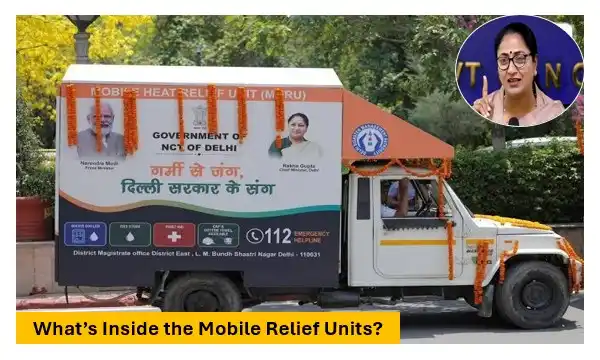
Delhi is experiencing another extremely hot summer and Chief Minister Rekha Gupta has rolled out a fleet of 13 “Mobile Heat Relief Units” that will provide immediate assistance to those afflicted by extreme heat. The vans (one for each district of the Delhi national capital) were flagged off from the Delhi Secretariat’s “Garmi Se Jung, Delhi Sarkar Ke Sang” initiative.
As temperatures in Delhi continue to rise and as the authorities have cautioned that severe heatwave conditions are likely to prevail for the next several weeks, the Delhi government has made these mobile heat relief units available as “relief stations on wheels” to provide assistance to those who may be vulnerable to experiencing heat exhaustion, including labourers, street vendors, commuters, sanitation employees, and residents of slums.
What does each Mobile Heat Relief Unit contain?
Each unit has been outfitted with necessary emergency supplies that will help to provide immediate relief to individuals during the peak of the summer season. According to government sources, each unit is stocked with cold water to drink; packets containing oral rehydration salts (ORS); first-aid kits; cotton towels (gamchas) and hats for protection from excessive sun exposure.
In addition to providing cold water in crowded areas, the vans will also have large tanks (400-500 litres each) that allow volunteers to deliver cold drinking water from the trucks at busy public places. The relief vehicles will operate from 11 am until 6 pm each day, providing relief to all the outdoor areas that experience the highest temperature during that time, including labour camps, bus stations, marketplaces, and residential areas with large amounts of businesses and individuals living there.
The initiative also provides medical assistance. In each van there are first-aid kits that can provide medical help to anyone who may be showing early signs of heat-related problems (e.g. heat exhaustion, dehydration). The project also provides ORS (Oral Rehydration Salts) free of charge to people who have suffered prolonged exposure to high temperatures in order to help them replenish fluids and minerals lost through prolonged heat exposure.
Focus on Vulnerable Groups
The programme is especially focused on vulnerable populations, such as outdoor workers and economic disadvantage, who work outside for extended periods of time (e.g. construction workers, rickshaw drivers and street vendors). The Delhi government is particularly concerned with protecting these groups of people who are working in outdoor conditions (in high temperatures).
Rekha Gupta, the Chief Minister of Delhi, has said that the objective of the project is not just to publicise a programme but to make sure that the aid is actually delivered to individuals on the ground where they live. She also called on residents to drink plenty of water and not to go out in the afternoon unless it is absolutely necessary.
The government has ordered employers to stop all outdoor labor work between x and x hours when it’s hottest outside. The government has also requested officials to provide worksite shade, drinking water, and rest facilities for workers during these hours.
read more:
- Dawood aide Salim Dola arrested in Turkey
- Judge Aman Kumar Sharma dies by suicide
- Cruise Boat Tragedy in MP
“Heat Action Plan 2026” Launched
In addition to the mobile emergency response units, the government also announced their “Heat Action Plan 2026”, which is a larger, collaborative effort with multiple government departments focused on increasing preparedness for localized and regional heat events and improving response to climate change / climate related emergencies over the next three years.
As part of the Heat Action Plan 2026, over 339 public health facilities throughout the city have been stocked with Oral Rehydration Solutions (ORS), critical medical supplies, cold packs and “cool rooms” for providing critical first aid to heat stroke patients. Over the course of the next three months, civil defence volunteers have been recruited in every district to assist with emergency response operations.
According to government officials, the administration has conducted satellite mapping and scientific assessment to identify the most severe instances of heat exposure in Delhi; therefore priority response areas will be addressed first in order to relieve affected populations from extreme heat.
Schools, Buses and Public Spaces Included
In addition to providing aid to those in need through relief vans, the government of Delhi has developed a number of supplemental strategies aiming to lower the incidence of heat-related health problems amongst both school-age children and people who use public transportation.
All schools have implemented a “water bell system”, which will notify students to drink water every 45-60 minutes. Students will be given oral rehydration solutions (ORS) before they leave school property.
The Delhi Transport Corporation (DTC) is now also placing coolers filled with drinking water on public transportation vehicles, and is developing water stations near bus stops where people can receive access to free cold drinking water and ORS.
Increasing Heat Problems in Delhi
Delhi has experienced winters that are rapidly changing to longer and hotter summers than ever before; temperatures now frequently reach over 40 degrees Celsius. The current rising temperatures in Delhi are largely attributed to climate change and urban heat impairments due to climate change, and this will increase the effectiveness of the increasing duration and severity of heat waves.
Bottom line
The purpose of the relief vans is to help reduce the occurrence of dehydration, heat exhaustion, and heat stroke during this summer’s hottest weather. If you find yourself in need of assistance with extreme heat situations, please contact the helpline at 112.
