


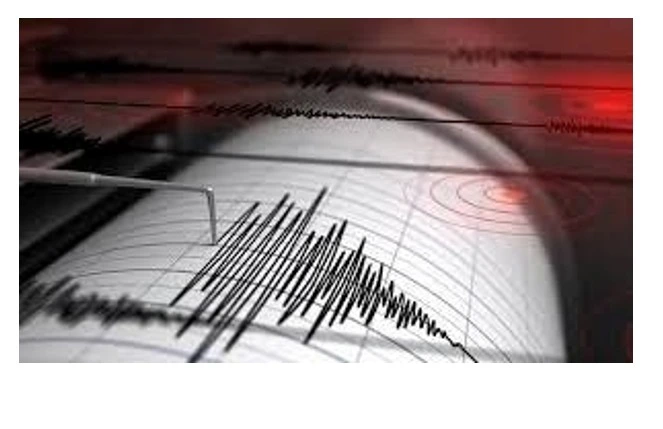
It was some time before dawn on Monday, and the Kashmir Valley was deep in slumber when the earth under Baramulla jolted to remind everyone of its tumultuous temper. At 5:35 a.m. Feb. 2, 2026, a magnitude-4.6 temblor shook the area and sent residents running into freezing air looking for safety outside their homes.
The shaking lasted only a few seconds, but the “wee hours” nature of the tremor — when sleep is most sound — heightened the perception of fear. Between the narrow alleys of Baramulla to the wide Srinagar neighborhoods, the sound of rattling windows and ceiling fans was about as bracing a sound in cold fury as they come.
The Epicenter and Technical Details
The National Centre for Seismology (NCS) said the magnitude of the earthquake was 4.6 but some users on social media claimed it as 4.7. The details of the event help to explain why it might have felt so immediate and sharp to those living nearby:
- Time: 05:35:54 IST
- Location: Baramulla District, Jammu & Kashmir
- Epicenter: Near the Pattan area (specifically around Hanjiwera Bala)
- Coordinates: 34.14° N and 74.41° E
- Depth: 10 km (Shallow)
Seismically speaking, the depth of an earthquake is a very important factor in how it feels at the surface. Because this temblor was close to the surface — the preliminary depth is just 10 kilometers — the seismic waves had less earth to travel through, meaning that shaking at the epicenter would have been more intense than from a deeper quake of its size.
A Morning’s Worries: The Human Toll
It was visceral in towns like Baramulla and other nearby districts such as Sopore, Ganderbal, Budgam. For many, the first indication wasn’t a sound, but rather something that felt like a heavy truck rattling by. That shiver was replaced by a definite lurch: within seconds.
“I was getting up for prayers when the wardrobe doors began shaking, just banging,” said Bilal Ahmad, a resident of Pattan. We snatched the children and dashed outside. It felt freezing, but no one wanted to be under a roof.”
Social media was soon filled with reports from the valley. The “sudden, sharp” movement woke residents in Srinagar, about 25 kilometers from the epicenter. Thankfully, the news was mostly good as the sun came up and local governments got started on their inspections. There were no immediate reports of loss of life or major structural damage in the hours following the quake.
Why Kashmir Shakes: The Tectonic RealityBehind ‘Earthquake Diplomacy’
It’s in the earth that one must look to understand why Baramulla is such a common place for such occurrences. The Kashmir Valley is a tectonic “hotspot” in other words. It is perched above a tangled nest of faults, influenced by the ceaseless march of the Indian and Eurasian tectonic plates.
- The Great Himalayan Collision – The collision which is going on from over 50 million years ago, has cause the raising of the Himalayas. The Indian plate is moving at about 5-6 cm/year and in crustal terms this process creates enormous strain.
- Seismic Zone V: The code puts most of the Kashmir Valley, particularly Baramulla and Srinagar areas, in Seismic Zone V — this is the highest risk category marked on India’s seismic map.
- Local Fault Lines: The area is intersected by the Main Boundary Thrust (MBT) and the Panjal Thrust. In particular, the region around Pattan and Baramulla is historically sensitive, as it had also been affected by the catastrophic 1885 Baramulla earthquake that changed the course of history in the region.
Echoes of the Past
For older Kashmiris, each tremor has been an unwelcome reminder of the October 2005 earthquake, a 7.6-magnitude monster that redefined the region’s attitude toward disaster management. Although a quake of 4.6 magnitude is far smaller, releasing thousands of times less energy, the psychological “aftershock” was real.
The 1885 event, which was also focused close to Baramulla, continues to be under seismological investigation. It flattened nearly 75,000 traditional huts and killed thousands of people. Today the new contemporary buildings in the valley are mixed between timber framed ‘Dhaji Dewari’ – which has to be overall incredibly earthquake resistant) and then concrete and glass structures that often have none of the necessary external reinforcements adding to this inherent anxiety within the community.
Preparedness and the Way Forward
- Earthquake Proof Construction: It is mandatory to follow the BIS codes in Zone V.
- The Rule: Drop, Cover and Hold On Basic training in schools and workplaces is the best protection for everyone before, during and after an earthquake.
- Emergency Kits: It can be life-saving to have a “go-bag” stocked with essentials (blankets, flashlights, dry food) in an area where sub-zero winter temperatures are not uncommon and staying outside can quickly become dangerous.
Disaster management teams as well as the Divisional Administration of Kashmir are on high alert for aftershocks. In a place renowned for its beauty, the nomadic nature of earth and sky is just a cost of doing business — something that the people in Baramulla have learned to live with, always on alert, always prepared.
