


The ability to diminish human suffering to a series of staggering numbers is terrifyingly easy. Our heads go blank when we read headlines that read 110 million, 120 million, record-breaking displacement. These are too great a number to understand. We imagine a sea of faceless strangers, with no names, striding across the borders, and we assign to them a political, cold term: refugees. We visualize a nameless, faceless crowd of desperate people crossing the borders, and a cold, political label for them: refugees.
However, if you remove the numbers, the legalese, the political rhetoric and the arguments, a refugee is just a person whose home burned down and who had to escape to save their children.
A refugee who is an architect from Damascus but drives a taxi in Berlin. A grandmother from Ukraine, who has been gardening for seventy years, and leaves her garden feet first with just a plastic bag of family photos. A refugee is a child who can hear the firing of the mortar but has not heard the sound of a school bell.
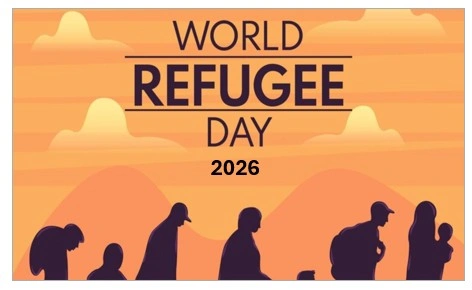
World Refugee Day is celebrated on 20th June every year all over the world. This day was set aside by the United Nations in 2001 to commemorate the 50th anniversary of the 1951 Refugee Convention, not a day for celebration. It is a pause together, an international moment to see beyond borders and bureaucracy, and to see in the faces of our fellow human beings.
The Indiscriminate Fire: Why People Flee by Donna Brazile
No one wants to be a refugee. It’s a situation in which one finds oneself when death is the only other option. A refugee is defined under international law as a person who has left his or her own country due to a well-founded fear of persecution on the basis of race, religion, nationality, political opinion or membership in a particular social group or because of widespread violence and war.
The world we live in today is characterized by multiple and overlapping crises of displacement:
- Long-Term Conflicts: Syria, Afghanistan, and South Sudan are just a few of the countries operating under decades of conflict, losing any sense of a permanent home from which to call home.
- Sudden, violent eruptive wars like in Ukraine, Sudan and Gaza can displace millions of families in just one night in a blink of an eye, demonstrating that anyone, anywhere, at any time can be displaced.
- The Unseen Push: Gang violence and the collapse of the system, as well as the growing acts of violence as a result of climate change – from droughts that leave farmland parched to floods that wash away entire villages – are leaving a new class of travelers with no choice.
Where Refugees actually go? The True Hosts
It is often believed that the majority of the world’s refugees are coming to affluent Western countries. The data paints a very different, profoundly humanistic portrait of neighbourly solidarity.
The UN Refugee Agency (UNHCR) reports that almost 85% of all refugees reside in low and middle income countries, with around 70% of refugees in countries bordering the countries of origin.
Read more:
- 7 Morning Routines You Should Never Skip According to Experts
- What Is the 5-Finger Breathing Technique? What Are Its Benefits?
After June 20: How to Take Off the Labels
The theme for World Refugee Day is all about “Hope Away from Home” – highlighting the transformative nature of inclusion and the concrete measures that can help bring hope to those fleeing from home.
Solidarity does not need to involve changing international treaties or organizing massive logistics across the world. It starts at the local, human level:
Inclusion is the advocacy of policies permitting refugees to work and attend local schools. It means being open to a new family on your block, and offering them a plate of food and a smile.
Let’s not use stale cliches, on this June 20th. We must never forget that each refugee is a mother, a father, a daughter or a son who wishes for the same things we wish for: a restful night’s sleep, a secure environment for their kids to play and a tomorrow devoid of fear.
