


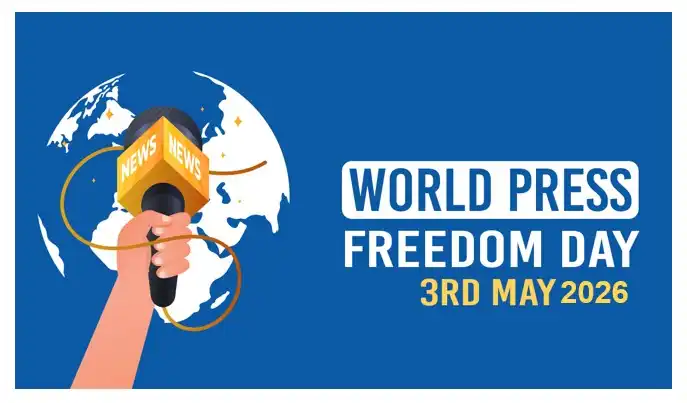
The world celebrates World Press Freedom Day on May 3 each year. At first sight it might be that this is a day only for journalists or media professionals. But it actually affects all of us.
Press freedom is the right to communicate information and ideas without fear. It is about being able to speak, to report, to question without undue pressure or control. Whether we realise it or not, this idea underpins the news we read, the updates we watch and the information we trust.Today reminds us that access to honest and open information is not something we can take for granted.
What Is Press Freedom
Simply put, press freedom means the media can do its job without interference. Journalists need to be able to report the facts, ask questions and tell the story without fear of censorship.
At the same time freedom is not carelessness but it means responsibility.
Freedom of the press includes
- The right to report facts freely
- No censorship or control
- The ability to question authority
- Obligation to furnish correct information
A society benefits from a balance of these elements as people are kept up to date with fact based information.
Why May 3 Is Observed
World Press Freedom Day was created by the United Nations. It is connected to an important development in 1991 called the Windhoek Declaration.
The statement supported the idea of a free and independent press. It stressed that one power should not have a monopoly of the media and that a plurality of voices should be permitted to exist.
Since then May 3 has been celebrated globally to
- Promote media freedom
- Remind governments of their obligation to respect press freedom
- Stand with journalists under attack
- Promote an open and transparent communication
you may also like:
Why Press Freedom Still Matters Today
But a free press is still very important, even in our digital age. News spreads quickly, but not all of it is reliable. A free and responsible press helps the people to understand what is true.
It also has an important role in shaping society for
- People can make informed choice
- Holding governments accountable
- Important issues are highlighted
- Increased public awareness
Without freedom of the press, it is difficult to challenge decisions or to know what is really happening. A strong media system builds trust and transparency.
Challenges Faced by Media Today
The idea of press freedom is widely accepted, but the reality is not always so simple. Media practitioners around the world are under various forms of pressure.
Some of the common challenges are:
- Censorship: In some places news is controlled and limited
- Political or corporate pressure: Media houses may be influenced by powerful groups
- Misinformation and fake news: Social media platforms are quick to spread false information
- Safety problems: Journalists sometimes get threats when they report
- Financial challenges: Independent media outlets often struggle to keep afloat
These challenges are a reminder that the struggle for press freedom is never over. It is not something that can be done once and forgotten.
The Role of Responsible Journalism
Freedom is good but it takes responsibility to be free. Journalism is not just a matter of releasing information. It is about getting the right information out there.
Responsible journalism means
- Fact checking at the point of publication
- Not using sensational headlines
- Providing balanced views
- Sensitivity and respect for privacy
Media that follows these principles becomes credible. That trust becomes hugely valuable over time.
How People Can Support Press Freedom
Press freedom is not only for journalists, not just for governments. Ordinary people have a role to play too.
Here are some easy ways you can support it
- Read news from trustworthy sources
- Don’t share unverified information
- Support independent media outlets
- Be observant and ask questions
These little things can make a difference. Demand for accurate information makes the system more powerful.
A Simple Reflection
World Press Freedom Day is more than just about media systems. This is the type of society we want to live in.
It asks a couple of simple but important questions
- Do we value truth over convenience
- We are careful what we believe and share
- Do we hear real voices
These questions are important to understand the bigger picture.
Conclusion
World Press Freedom Day reminds us that free and open communication is a precondition of any society. It connects people, raises awareness and brings truth to the masses.
At the same time it also stresses the need to protect freedom and to exercise it responsibly. A strong independent press is good for everyone, not just those of us who work in media.
As we observe May 3, it is worth taking a moment to observe the importance of honest journalism and how it enriches daily life. In an information age, it is not just access to news that counts, it is access to the right news.
