


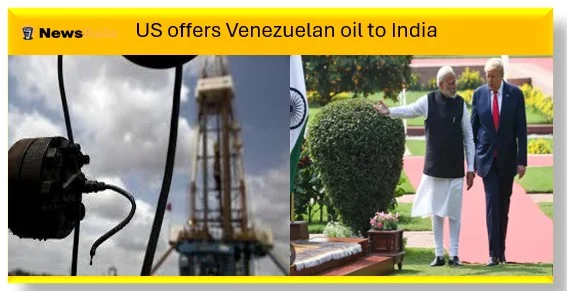
America’s Real Price on Its Russia PolicySharat Khandelwal/ReutersThe global energy map is in a dramatic reshuffle, driven by America’s strategic pivot to steer India away from its heavy dependence on Russian crude. After a number of geopolitical changes in early 2026 that included the surprise apprehension of former Venezuelan President Nicolás Maduro by US troops on January 3, theTrump administration has provided India with an overture to New Delhi: restart imports of oil from Venezuela to make up for decreased supply from Moscow.
This diplomatic effort is two-fold. To Washington, it is a weapon to further squeeze Russian oil revenues that feed the conflict in Ukraine. For New Delhi, it is a lifeline to reduce the cost of its energy basket at a time when Russian imports are becoming more expensive with mounting American tariffs.
The Russian Retreat: Why India Is Now Trimming Down
India was the largest buyer of seaborne Russian crude for nearly four years as it capitalized on steep discounts in the wake of the 2022 invasion of Ukraine. Then the tide turned, in late 2025.
The effects of these economic punishments are now being seen in the numbers:
Drop in Volume: India’s imports of Russian oil have slumped to around 1.2 million barrels per day (bpd) in January 2026, from above the peaks of over 2 million bpd seen in mid-2025.
Future Estimates: In house forecasts are the daily total will drop further to one million bpd in February and could fall to a three-year low of just 800,000 bpd by March.
Refiner Timidity: Private behemoths including Reliance Industries and state-run companies such as HPCL have temporarily put breaks on or slowed down purchases from Russia, deciding to take in only ‘sanctions-compliant’ cargoes from non-blacklisted intermediaries.
As the tab for doing business with Moscow keeps climbing, the hunt for a “politically acceptable” alternative has led straight to Caracas.
Venezuela: The New “Permitted” Source
The unexpected re-entry of Venezuelan oil production comes directly attached to the ongoing regime change, underway in South America. The US has shown signs of a change in policy since the appointment of despised interim president Delcy Rodríguez and announcement of the opening up for Venezuela’s oil industry, to private investment.
Washington has signaled it will soon issue a general license for India to resume large-scale purchases from PDVSA, the Venezuelan state oil company. By doing away with these barriers, the US is effectively establishing a “clearinghouse” that will allow Indian processors to swap Russian Urals for Venezuelan Merey crude.
For India, it is more than a political victory but an operational imperative. Indian refineries like Reliance’s enormous Jamnagar complex are calibrated to refine the type of “heavy” and “sour” crude that Venezuela produces. Restoring these flows would mean India could keep its refining margins in place without angering the US Treasury.
Geopolitical Crosswinds: A Trade Deal Hangs in the Balance
The shift toward Venezuela is not just about oil; it’s about a larger economic realignment between New Delhi and Washington. India’s readiness to lower Russian purchases to under 600,000 bpd is a “flexible requirement” for securing a sweeping trade deal with the U.S., reports indicate.
“India is ensuring diverse crude sources and as Russian oil imports dip,” Oil Minister Hardeep Singh Puri said at India Energy Week 2026, publicly acknowledging the transition in strategy while tacitly referring to the US-led initiative without taking any names.
The message from Washington is straightforward: if you want sanctions relief or an end to the “Trump Tariffs” – on India’s steel exports, aluminum industries, and technology sector for instance – show us that you are reducing the amount of “petrodollars” sent to Moscow. The “carrot” to make that economic transition less painful for the Indian economy is to sell Venezuelan oil in its place.
The Risks: Can Venezuela Deliver?
But while the diplomatic road is clear, the practical road ahead is filled with obstacles. Underinvestment stretching back decades, combined with recent conflict, left Venezuela’s oil infrastructure in ruins.
Production and delay hurdles: Oil market analysts second-guess whether Venezuela has capacity to boost shipments quickly enough to make the 400,000-500,000 bpd shortfall left by Russia.
Confusing marketing: There’s still no clarity whether the oil will be marketed by PDVSA directly, or over Western trading houses like Vitol or Trafigura that the US now supervises.
Stability worry: Though a Constitutional Court in January declared the US “oriented” government of Caracas, political instability may escalate again to stop export supplies.
As the globe’s third-largest oil consumer, India is in a high-stakes game of musical chairs with its energy providers. For now, the music has stopped playing for Russia and the seat is being saved for Venezuela.
