


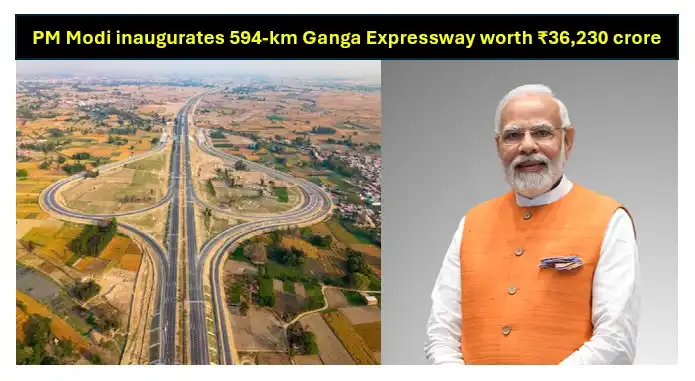
On April 29, 2026 Prime Minister Narendra Modi inaugurated the Ganga Expressway in Uttar Pradesh. At 594-kilometres in length, the new expressway has been hailed as a game-changer for infrastructure development in India. The estimated cost of building this expressway is ₹36,230 crore and it is expected to have a massive positive impact on the economy for the entire region by improving connectivity, stimulating economic development and connecting different parts of the state.
A Mega Infrastructure Milestone
The longest expressway in Uttar Pradesh, the Ganga Expressway connects the City of Meerut to Prayagraj. The Expressway is 6 lanes, fully access controlled and will be expandable to 8 lanes. In fact, the Ganga Expressway is one of the largest greenfield road projects in India.
The Ganga Expressway was built in many smaller packages to ensure that the project was delivered on time and under budget. This incredible achievement has been made possible though sound infrastructure planning and execution at a large scale.
read also: Punjab Police has withdrawn Harbhajan Singh’s security
Improved Connectivity Across 12 Districts
The Ganga Expressway connects 12 different districts of Uttar Pradesh through a seamless East-West passage. The expressway has significantly improved the transport of goods and people between urban, semi-urban, and rural areas throughout the state.
The project will connect East and West Uttar Pradesh via a fast-moving corridor to provide linkages between multiple economic zones and reduce bottleneck issues with logistics between them; at the same time, the Western and Eastern Economic Zones will be more efficiently linked to each other by the expanding expressway and link corridor network in Uttar Pradesh.
read also: Raghav Chadha quits AAP and joins BJP
Decrease in Travel Time
One of the primary benefits of the Ganga Expressway will be a substantial reduction in the travel time between Meerut and Prayagraj, which used to take up to 10 to 12 hours but can now be done in about 6 hours.
The expressway was designed for speeds up to 120 kilometers per hour, allowing for faster, safer, and smoother travel; this will help all types of travelers, as well as transporters and logistics companies, throughout the state.
Economic Growth & Logistics Catalyst
The expressway is being promoted as a “lifeline for development” within Uttar Pradesh and is expected to spur increased economic activity by providing greater supply chain efficiencies, lower transportation costs, and attracting new investments.
Industrial and Manufacturing clusters are currently planned to be established along the corridor to help create jobs and grow the regional economies. Additionally, the improved connection along the expressway will assist the farming community by allowing them to get their goods to market faster.
Strategic and Modern Features
Modern infrastructure standards have been used to build Ganga Expressway including safety features, emergency services, public utility areas etc. The project includes a number of other features including bridges and service roads, as well as facilities like rest areas and fuel stations that will service the traveler’s journey on the expressway.
The integration of Ganga with other expressways and future corridors of the expressway will create a complete, high-speed road system throughout the State of Uttar Pradesh, thus solidifying U.P.’s logistics center role.
Importance of the inauguration of Ganga Expressway
Ganga Expressway provides both political and developmental importance to the U.P. government. It is an example of U.P.’s build-out (and growth) of large-scale infrastructure projects being a catalyst for the economic development that will occur with U.P. in its new role as one of the central states in India.
Taking on such a major infrastructure investment, as Ganga Expressway, shows U.P.’s rapid growth in expressway development. The state already comprises a major portion of the Access Controlled Highway System in the country.
A Transformational Corridor for Uttar Pradesh
This expressway serves as more than road infrastructure; it is a significant part of changing the economy in UP. It should help with long-term development of the state by enhancing connectivity between areas, speeding up travel times and facilitating industrial growth.
Infrastructure improvements in India are meant to be supported by larger national strategies for economic development, which include highway construction projects. These projects illustrate how ambitious India’s development goals are and how important places such as Uttar Pradesh will become to helping drive the country’s economic growth going forward.
