


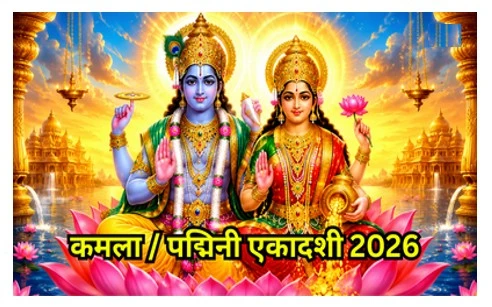
Padmini Ekadashi (Kamala Ekadashi), one of the rare yet spiritually important Ekadashis in the Hindu calendar, is dedicated to Goddess Laxmi. The sacred fast on Padmini Ekadashi is observed in the month of Adhik or Purushottama Mas (an additional lunar month that occurs, generally, once every three years).
According to the date of 27 May 2026, devotees of Lord Vishnu will do the following to attain spiritual purification and blessings from Lord Vishnu and Goddess Laxmi: maintain a day of strict fasting; offer prayers to Vishnu; recite/chant sacred mantras to Vishnu; give Donations/Charity or perform acts of kindness to others in the name of Vishnu.
Hindu Calendar:
- Ekadashi Date: 27 May 2026
- Ekadashi Tithi Begins: 26 May 2026 (Approximately 5:10 am)
- Parana (the end of fasting): On Dwadashi, 28 May 2026; more specifically, to break fast during prescribed time, after sunrise.
Because Padmini Ekadashi falls in Adhik Maas, it is considered to be much more special than other Ekadashis.
Meaning and Importance of Padmini Ekadashi:
Padmini means “lotus” is symbolic of purity, spiritual awakening and devotion. The significance of Padmini Ekadashi is very closely related to the entire Purushottama Masa, which is devoted entirely to worship of Lord Vishnu. It is meritorious according to the Hindu scriptures, to give offerings, do charity, and/or fast during this period and have greater effect than performing them any other time or period.
Devotees believe by observing this vrat they can:
- obtain peace & inner purity,
- have good karma & remove all sins from previous lives,
- gain wealth & divine protection,
- and make spiritual progress towards moksha (liberation).
Observances of this vrat are also believed to be connected to blessings from goddess Lakshmi, so this is why it is sometimes popularly referred as Kamala Ekadashi in certain places.
you may also like:
- Ganga Dussehra on May 26, 2026
- Study reveals exercise reshapes the brain
- Five Incredible Yoga Retreats Worldwide
Öbservances of Padmini Ekadashi – rituals
Preparations for Dashami
Before Dashami, devoted to observing navratri will start their preparation on the previous day of Dashami. Many devotees will be sitting out of tamasik (low energy) foods, such as onions, garlic, grains, non-vegetarian food, and will adhere strictly to a sattvic lifestyle, and mental control.
Morning Bath and Sankalp
On Ekadasi morning, devotees wake up before sunrise, take a holy bath and make a sankalp (a vow) to perform the vrat with bhakti (devotion).
Worship of Lord Vishnu
Images/idols of Lord Vishnu will have a variety of items of worship laid out, including:
- Tulsai leaves,
- Yellow flowers,
- Incense and oil lamps,
- Various fruits and sweets.
The recitation/chanting of Vishnu Sahasranama; and chanting “om namo bhagavate vasudevaya” is extremely auspicious as per tradition.
Fasting Rules
Fasting is completed using a variety of different forms of fasting:
- Nir-jala – no food or water
- Fasting of fruits & milk
- Sattvic fasting with no grains
On this day devoted individuals will spend time doing prayer, and participating in singing devotional songs, or otherwise known as Bhajans, as well as meditative activities such as reading scriptures.
Jagran or Charity
A large number of people will observe Jagran, an overnight vigil consisting of singing devotional songs, as well as give money, or food to the poor and needy at this special time of celebration (Ekadashi).
Celebration for All Regions of India
The Padmini or Kamala Ekadashi Celebration will occur in temples and homes across India. Many places will hold special Vishnu puja’s, kirtans (devotional song or devotional music and singing) and satsangs (devotional gatherings). Regions such as Gujarat, Maharashtra, and Uttar Pradesh will have large numbers of people participate in prayer and devotional activities at the Vishnu and Krishna temples.
Some homes decorate the Puja area with lotuses, which symbolise purity and prosperity, to celebrate this special day. There will be an abundance of Aarti (devotional services) and one or more readings from scripture throughout the entire day at the temple dedicated to Lord Vishnu.
Significance of Spiritual Nature of Adhik Maas
Adhik Maas (also known as Purushottam Maas) consists of an additional month included in the Hindu Calendar that was created to balance the lunar cycle with the solar cycle. This additional month is believed to have an extremely high level of sanctity with regard to prayer, charity and self-reflection according to Hindu scriptures. Additionally, since Lord Vishnu is the presiding deity of this additional month, observing Ekadashi fasting during the celebration of Adhik Maas is believed to provide relatives with extremely high spiritual reward.
Conclusion
Padmini/Kamala Ekadashi is much more than just a fast; this day is an occasion to express your devotion, discipline yourself and cleanse yourself spiritually through the observance of this rare Ekadashi. Practicing the observance of this Ekadashi with sincere intention is thought to give you blessings from God, provide you with mental well-being, and increase your spirituality. For devotees of Lord Vishnu, the day has strong potential to strengthen your faith and receive God’s blessings toward living a prosperous and righteous life.
