


New Zealand first to sign apple FTA deal New Zealand has created international history as the first country in the world to secure preferential duty free trade with India for an apple such a breakthrough recognising this country’s SAHIBA n BHULLARS RAVINDER ‘ diamond standard with two further apples Indian market and pest assault on potatoes it recognising status treatment. The agreement, concluded on December 22nd, 2025, represents a major break from India’s long history of protectionist measures for its home-grown horticulture sector.
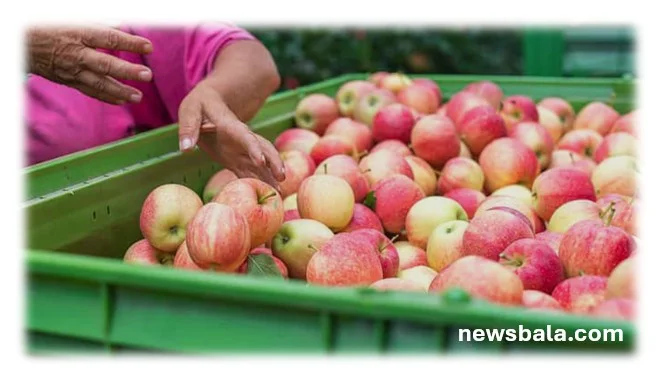
By knocking down the previous 50% barrier (refer to fact sheet), this agreement opens a new chapter of agricultural cooperation between our two countries, balancing New Zealand’s finest farmers with India’s poor fellow farmers.
Breaking 50%: How Each Dem Does It
India in the past has levied a hefty 50% duty on apple imports from all countries to protect its orchardists, especially in places like Kashmir and Himachal Pradesh. But the game changer at this point is the new India-New Zealand FTA with a carve out on tariffs TRQs which are bespoke:
- Reduced Duties New Zealand can now export apples to India at 25% duty within a quota.
- Increased Quotas: The first year the quota will be 32,500 metric tonnes (MT) and it will increase over a period of six years to reach 45,000 MT.
- Price Safeguards: An MIP of $ 1.25 per kg, to effectively prevent dumping and provide fair competition has been set.
- Seasonal Window: The reduced tariff is applicable only from April 1 until August 31, a counter season in which supplies of Indian domestic apples are generally at lower level and the impact will be relatively limited to local crop.
Any New Zealand apple exports beyond the quota or time frame will continue to attract a 50% duty.
“First-World” Innovation for Kiwifruit and Honey
While the apple concessions grabbed the headlines, the FTA contains equally important breakthroughs for a raft of other New Zealand exports. Among other “firsts” in an Indian trade deal:
Kiwifruit: India has proposed a duty-free quota of 16,000 tonnes per annum. For larger volumes, the duty has been halved from 33%.
Mānuka Honey: The premium product and the first time yet at any point included in any trade agreement that India has accorded preferential treatment to honey receiving access under a quota of 200 MT.
Read also
The Grand Bargain: Tech for Trade
The deal is not a one-way street for exports of fruit. A key part of the deal is a New Zealand investment pledge of $20 billion in India over the next 15 years. But, more importantly, is creating a number of Agricultural Productivity Partnerships.
New Zealand, which has an apple production of 53.6 MT/ha (against India’s 9.2 MT/ha), it has also agreed to transfer technical knowledge.
- Orchard care: Upgrading planting and irrigation practices.
- Post-Harvest Measures: Improved cold-chain and supply chain technology will cut down on wastage.
- Planting Material: Introduction of high yielding disease resistant apple types.
- OPINION Important Symbolism: A Message to the World
Coming three months after India signed the RCEP on November 15, RCEP will become the first multilateral agreement with all ten Asean members for India once seven of them complete their domestic processes. As the U.S. and E.U. continue pushing for similar agricultural concessions, Kiwis can claim a major diplomatic victory right now on the issue.
For India, the deal represents a strategic pivot. If the government can pick a partner with a supply season that complements India’s (instead of competing with it, as Australia and Argentina’s do), the deal has shown it can liberalize trade without throwing its own farmers to the wolves.
In conclusion, the India New Zealand Free Trade Agreement (FTA) is a game-changer for Indian trade policy with New Zealand being the first country to gain preferential duty concessions on apples under an Indian FTA. By trading off market access with strict safeguarding measures such as TRQs, and MIPs the deal provides that New Zealand exporters would derive a competitive advantage in India’s lean seasons, while local farmers are left protected from price crashes.
