


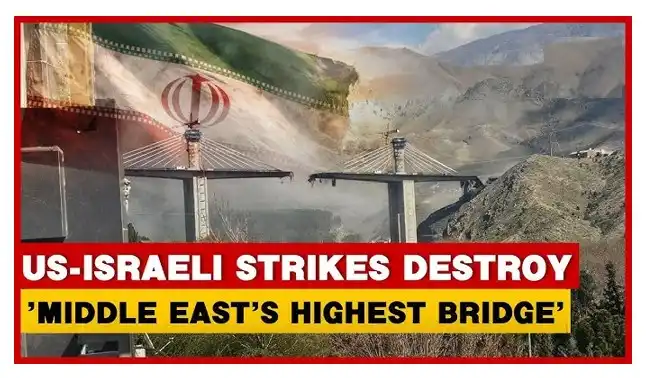
In a significant escalation of the continuing conflict between Israel and the United States and Iran, the United States and Israel have carried out airstrikes against the Bridge B1 in Iran; the Bridge B1 is claimed as the tallest bridge in the Middle East, located at Karaj, approximately 40 km’s west of Tehran, and was a major infrastructure project in effort to connect Iran’s capital of Tehran to the major western transport corridors.
Strategic Infrastructure Targeted
The Bridge B1, standing at approximately 136 metres high, was seen as a significant engineering accomplishment, as well as a reflection of Iran’s ability to build its own infrastructure and achieve an advanced construction industry despite being under sanctions.
Extent of damage to the bridge and casualties sustained as a result of the airstrike
The airstrikes have resulted in extremely severe structural failure of the Bridge B1, and the destruction of parts of a bridge and separation of sections could be visually identified.
Multiple strikes have been reported by US and Israeli intelligence and/or Iranian media sources, specifically a second airstrike conducted while multiple people were rendering assistance to victims at the site of the first attack.
There were two civilian deaths, and numerous civilians were confirmed injured as a result of the air strikes.
read also: US begins overland B-52 Bomber missions on Iran
Importance of the B1 Bridge as a project of national significance
Although the B1 Bridge was an infrastructure project, it was to also reduce traffic congestion along the very heavily used Tehran-Karaj corridor, one of Iran’s busiest transportation routes.
The new bridge, which spans across a ravine near Iran’s Karaj River, is designed to enable daily flows of tens-of-thousands of vehicles between Iran’s northern and western regions and is expected to significantly improve transportation between those regions of Iran.
Reports have indicated the bridge was still under construction at the time of the strike on it, however, the structure was nearing its completion and its addition to Iran’s transportation infrastructure was expected to be vital.
US military officials believe this strike on the bridge was part of a much larger strategy by the US and its allies to disrupt Iran’s military supply chain. The Tehran-Karaj route has long been identified as an important corridor for the transit of supplies necessary to support Iran’s military operations (including component parts for missiles and unmanned aerial vehicles) and destination points for the relocation of equipment and personnel.
This strike against the bridge was expected to hinder Iran’s ability to move its equipment and personnel in an efficient manner among areas critical to its military operations.
As a result of this strike, former President Donald Trump issued a strong message to Iran, warning the Iranian government that it should begin negotiations “before it is too late” and released images of the damaged bridge with an indication that Iran could expect further military operations against it by the US and Israel.
President Trump’s comments may have heightened the fear of additional escalatory actions by the US military through the expressed potential for continued strikes over the next several weeks as part of a larger military campaign.
read also: Iran Issues Fierce Warning to US Troops
Part of a Wider Conflict
This was not an isolated incident, as a military operation against both parties began at the end of February, and since then both sides have attacked each other’s assets numerous times with Iran responding to those attacks with missiles and drones aimed at either Israeli or US-linked targets in the region.
The current conflict has created a substantial loss of life and significant damage to infrastructure in the countries involved.
Regional and Global Implications
The destruction of an important asset in the infrastructure of the region has more broad implications than just a military goal. This attack has disrupted transportation and generated concerns about humanitarian issues in addition to adding further tension to an already unstable situation in the region.
In addition, the current conflict has affected global markets, especially in the area of energy supplies; and as tensions around maritime shipping routes like the Strait of Hormuz continue to escalate, market volatility will only increase.
Civilian Impact and Humanitarian Concerns
There has been criticism surrounding this strike for the impact it has had on civilian infrastructure as well as the reported casualties incurred from this attack. Strikes on transportation systems will have long-lasting effects on the daily lives of the average citizen by making it more difficult for them to move about, access services and participate in their local economy.
The reported second strike while attempting to conduct rescue operations has raised further concerns regarding the humanitarian aspect of the war.
Uncertain Road Ahead
Both parties involved in this conflict have no intention to back away from the current situation and this is causing an unstable environment. The strike against civilian critical infrastructure including the B1 bridge moves towards strategic deep targeting which increases the chances of more prolonged conflict with more chances of escalation.
As international calls for more severe means of conflict resolution are increasing over the next few weeks, it will be essential to see if diplomatic resolutions can prevent a larger regional crisis from occurring.
