


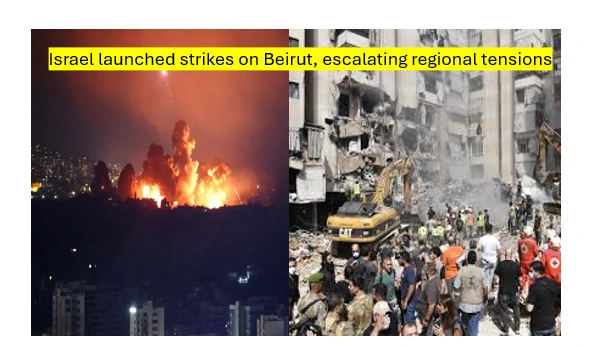
Beirut, Lebanon’s capital, has also been the site of an Israeli Air Force strike following a swarm of rocket and drone attacks against Israeli territory carried out by Iran-supported Hezbollah militants in Lebanon. The bombardment represents a significant escalation of violence between Israel and Hezbollah compared to the last full-scale conflict between them in 2024.
Multiple sources of media have reported that, overnight and into the early morning hours of Monday, as part of the latest bombing campaign, Israeli warplanes targeted numerous sites and locations in southern Beirut – particularly in the three Hezbollah strongholds of Dahiyeh, Haret Hreik, and Jamous – creating numerous loud explosions throughout the city and causing many residents to flee, while thick plumes of smoke rose again into the sky.
According to the Israeli Defence Forces, they are targeting “Hezbollah military infrastructure” located throughout southern Lebanon, including key leaders and storage of weapons; these attacks come in direct response to Hezbollah’s cross-border attacks on Israel.
What prompted the bombing: Cross Border Attacks
The immediate catalyst for the bombing campaign against Beirut came when a large battery of missiles and drones was fired from Lebanese territory and into Northern Israel by Hezbollah; this represented the first mass offensive attack by Hezbollah against Israel since November 2024, when the two sides signed a ceasefire agreement.
Hezbollah claims it is carrying out an “Revenge Attack” in response to a recent joint attack by both the USA and Israel that killed Iranian Supreme Leader Ayatollah Ali Khomeini, and it is also based upon Hezbollah’s claims of “constant aggression” being committed on a continued basis by the State of Israel against Lebanon and its citizens.
In response to the attacks, Israel responded quickly, stating it will neither accept, nor tolerate any actions taken by Hezbollah which threatens to escalate the already tense situation into an even larger conflict and states that Hezbollah will be held fully accountable for any further actions taken against Israeli interests in the region. The Israeli military stated that its military operations are focused on targeting Hezbollah militants, especially senior leadership within the Hezbollah organization.
Currently, over 50,000 people have been displaced from their homes due to the bombings and subsequent violence in the region and international humanitarian organizations have documented that many families are now homeless and fleeing from the violence and are about to face some of the worst humanrights violations and humanitarian crisis resulting from the most recent conflict in Lebanon. International Agencies such as the Red Cross, have stated that renewed violence will result in large-scale displace from Lebanon, similar to the situation that occurred as a direct result of the last Israeli Conflict.
Read also: US-Israel strikes on Iran: Dubai International Airport damaged
Political Reactions and Regional Tensions
Hezbollah’s rocket attacks occurred against the backdrop of increasing instability in the Middle East, stemming from ongoing Israel-US operations against Iran and rising tensions from last week’s assassination of Ayatollah Khamenei. This combination increased the likelihood that Iran would get drawn into direct actions, thereby increasing the potential for an expanded regional conflict.
Estimated Casualties, Damage, and Further Effects
Early reports from combined sources of international organisations and Lebanese health professionals, have confirmed that dozens killed and injured as a result of today’s round of attacks, but as the fighting continues casualty counts are not finalised.
Buildings in several neighbourhoods in Beirut have sustained damage from the blasts, and residents report loud explosions and sirens from throughout the city.
Read also: Explosions heard in Dubai amidst ongoing tensions
Why It Matters?
Regional ceasefire violations occurred and the most recent escalation means that the current relative peace along the Israel-Lebanon border between them has been broken with the end of the very small existing status quo from 2024 onward.
Increased potential for a broader conflict exists because of the military activities between Iran, Hezbollah, Israel and the U.S., which are overlapping but do not have any coordination by all parties involved in the conflicts taking place now in the Middle East, leading to analysts thinking that there is a good chance of escalation throughout the Middle East region very quickly.
Humanitarian issues in Lebanon exist as a result of both political and economic crises that the country has been experiencing for some time, including significant humanitarian issues from ongoing large numbers of displaced people, mental trauma and suffering, due to repeated dislocation of the population.
