


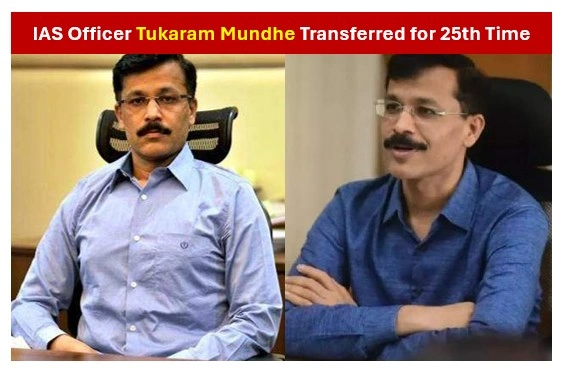
The Maharashtra government has transferred Senior IAS Officer Tukaram Mundhe for the 25th time. His transfer has reignited concerns about political interference and the autonomy of administrators that uphold their principles within India’s civil service.
However, despite his numerous past transfers (due to his rigid adherence to regulations and policy) and the headaches he has caused at times, many individuals continue to admire him. Conversely, he has created controversies surrounding his tough stance regarding corruption, political pressure, and irregularities.
Sparks Fresh Debate on Bureaucratic Stability
Most recently, Mr. Mundhe has once more been relocated in the bureaucratic reshuffle within Maharashtra; he will take on another role after already being transferred in the past. Most officers within India’s Admin are usually not subject to this many moves during their brief tenures, and it appears that by disrupting the continuity of governance, Mr. Mundhe’s frequent postings are doing nothing more than discouraging an administration effort toward reform.
read also: West Bengal Transfers 120 Acres of Land to the Centre
Reputation as a Tough Administrator
Mundhe has a long history of being an officer who does not tolerate nonsense at all. While he has been in municipal administration, as well as with public transport authorities, he was previously known for being firm and fair to ensure financial discipline and to implement strict anti-corruption policies.
read also: BJP changes street colors post its victory in West Bengal
A Career Marked by Frequent Transfers
As the commissioner for several municipal commissions in various cities across the country, he has often implemented strong measures to address illegal building, buildings that were being constructed without proper authorization, and contracts that had been awarded improperly. Although many residents of the municipalities have praised him for his dedication and honesty, some political leaders and unions representing municipal employees have accused him of being inflexible and unyielding.
In addition to being well regarded as someone who took direct action against municipal dysfunctions while in Nagpur and in other cities, many members of the public have praised him through social media for being an “honest officer” who takes on long-established interests.
read also: IAS officer Padma Jaiswal fired from service
COVID-19 Period Brought National Attention
His appointment as the Municipal Commissioner of Pune during the COVID-19 pandemic brought national attention to him, as excellent measures were put into place for containment and discipline under the pandemic protocols.
A lot of the city’s citizens have expressed appreciation for the manner in which he imposed order on the pandemic; however, there were reports of political tension during that timeframe, which eventually resulted in another change in his position.
The pandemic phase has further established his national reputation, as an officer who makes the tough decisions, without regard for their political impact.
Debate Regarding Political Interference
The last transfer has re-energized an old debate about the effectiveness of India’s bureaucratic system. Administrative analysts contend that routine transfers of officers weaken governance and inhibit the successful execution of long-term policy.
Former civil service officers have expressed the position that civil service officers need stability in order to successfully implement reforms and that frequent transfers create uncertainty and diminish accountability because officers do not remain in their position long enough to see the completion of their projects.
On the other hand, the government views the transfer of officers as an administrative necessity and a function of normal governance. Political leaders typically refer to the transfer of officers as necessary to assist in the balancing of administrative goals and to provide needed coordination among agencies.
Public Reaction and Social Media Support
Following the news of Mundhe’s transfer, many people shared their frustrations about another officer being transferred on social media. Many users praised his integrity while questioning why so few officers like him are transferred so often.
People have used Mundhe as an example when discussing efforts to reform civil service systems, and hashtags supporting him have been used on several occasions whenever a transfer involving him is public information.
For many, Mundhe represents Administrative Integrity. He is still an emblem for exactly how difficult it is for an officer to maintain strict government standards to meet the demands of a politically charged environment.
Mundhe’s most recent transfer will likely continue the discussion about the relationship between political power and bureaucratic autonomy in India’s administrative system.
