


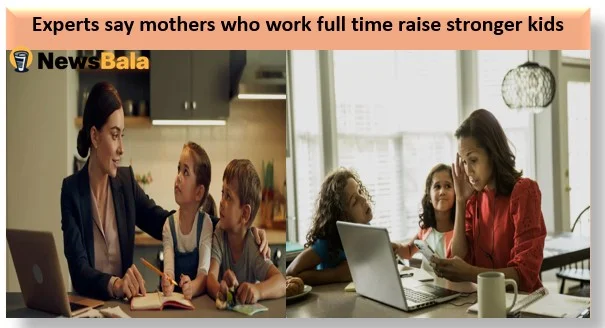
For many years, the challenge of balancing work and motherhood has been shrouded with controversy, feelings of guilt, and strong social norms. It has been commonly argued that full-time work for mothers has been detrimental to their children. But there is emerging evidence that contradicts this view. Increasingly, psychologists, sociologists, and child development specialists are positing that full-time working mothers produce children who are more resilient, autonomous, and socialized. So, instead, full-time work can be used as an example of how things can be handled well, and this is something that follows them into adulthood.
Reframing “Strength” in Children
When experts use the phrase “stronger kids,” they mean more than just physically strong kids. Strength in this case encompasses emotional strength, autonomy, problem-solving abilities, confidence, and adaptability. According to experts in the development of children, kids whose parents are working are more likely to exhibit such characteristics than other kids at an early age.
Strength also encompasses resilience, adaptability, and ability to effectively function in positive and negative social situations. Such attitudes and behaviors are learned by children through observation of how their mothers juggle their roles and roles-related stress and setbacks.
Teenagers Launch Legal Challenge Over Australia’s Social Media Ban for Children
Modeling Role Resilience and Work Ethics
One of the most persuasive arguments for full-time working mothers being beneficial for their children is role modeling. Children learn behaviors, attitudes, and values from people who can affect their lives, and parents in particular have this ability. By working full time, the mother will model for the children qualities such as discipline, commitment, and perseverance.
Experts state that if children witness their mothers having a career and working, this increases their chances of respecting hard work and understanding what responsibility entails as well as learning that hard work results in success and that sometimes failure occurs along with success as a result of putting forth effort. Daughters benefit by having greater ambitions and a more confident sense of self, and boys benefit by understanding that women have a place within the workplace as well.
Independence Starts Early
Children whose mothers work usually become independent earlier. In cases where there are structured routines and responsibilities, children also pick up life skills such as time management, getting ready for school, and solving minor problems independently.
Psychologists underline that independence does not mean neglect but reflects trust. When kids are encouraged to take age-appropriate responsibility, they develop confidence in their own competencies, a kind of early independence that often translates into stronger decision-making skills and adaptability later in life.
Quality time over quantity time
A common concern is that full-time work reduces the time mothers can spend with their children. Experts elicit this with a rally of facts, emphasizing quality over quantity. Working mothers often become more intentional with their time, focusing on meaningful interactions rather than passive presence.
In fact, many studies indicate that children benefit more from engaged, emotionally available parenting than from constant supervision. Focused conversations, shared meals, bedtime routines, and weekend activities can foster strong emotional bonds even when a parent works full time.
Emotional Strength and Social Skills
In cases where mothers are working, children are generally introduced at a young age to a variety of social circles, like day-care centers or after-school programs. Some believe that these are incredibly useful as far as social development in regard to interactions with others, as children are taught ways of cooperating, communicating, and resolving conflict.
Furthermore, children learn about emotional control through observing how well their mothers cope with stress. Mothers are able to emotionally control the stress in their personal lives when they are able to handle the various demands placed on them in a controlled matter.
Removing Gender Stereotypes in the Home
Full-time working mothers can cause shifts in the dynamic roles that have traditionally existed in the family. When mothers have full-time jobs, children and fathers get involved significantly in domestic work. It is also said to create an equal dynamic in the family, as children understand that neither mothering nor domestic chores have anything to do with gender.
Boys brought up within such families easily become men who are expressive and understanding partners. Girls, on the other hand, do not confine their goals according to traditional female standards. This brings about well-adjusted and balanced individuals.
The Digital Double-Edged Sword: From Likes to Anxiety in Children’s Minds
Addressing the Guilt and the Myths
Despite the evidence, many working mothers experience feelings of guilt, which can be driven by society rather than science. Researchers emphasize that guilt does not mean poor parenting. Actually, concern for the welfare of the child can be an indicator of the parent’s emotional involvement.
Research has consistently shown that children’s outcomes are far more dependent on the support and stability children receive from their parents rather than the mother working full time. Financial security and fulfillment are also aspects that are essential for a child’s development.
A Broader Definition of Good Parenting
There appears to be consensus that there isn’t any one right way for raising resilient children. Stay-at-home mothers aren’t necessarily better than mothers who work outside the home, or vice versa. The key is providing an environment that gives children all the support, value, and encouragement for development that they need.
Through modeling resilience, independence, and equality, many mothers working full time are raising more resilient and better-equipped offspring for today’s world. After all, strength does not always mean being physically present—it means that offspring are equipped to succeed within a complex world that is often challenging and demanding.
