


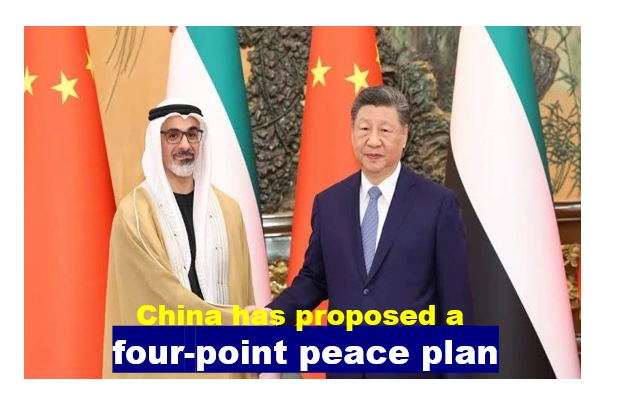
As violence continues to escalate and affected civilians cry out for assistance, China is urging an extensive peace proposal to help end the crisis and provide a long-term solution politically. China’s proposal reflects their increasing diplomatic presence within the region and contains three key elements: an immediate ceasefire, humanitarian assistance, and re-establishing political dialogue.
Ceasefire is the Number One priority
As a foundation to China’s proposal, they ask for an immediate and comprehensive ceasefire from all parties involved. Chinese officials believe that continuing military engagements is worsening the already deplorable humanitarian situation in the region and increasing the likelihood of a large-scale, regional conflict. Their argument is that, without an immediate ceasefire, there will be no opportunity for meaningful diplomatic assistance to occur. This is consistent with China’s long-standing belief that the only meaningful way to resolve protracted conflicts is through dialogue, rather than military force.
Humanitarian Assistance and Civilian Safety
The second component of China’s proposal is directed towards the need for immediate humanitarian assistance for civilian populations, particularly in the most severely impacted areas, and to ensure access to that assistance will not be obstructed.
The statement expresses the fundamental aspects of the plan and highlights its distinguishing features in terms of the objectives of the humanitarian assistance as outlined by The People’s Republic of China (PRC). The PRC believes that civilian protection must be paramount. The PRC states that protection will involve the provision of access to critical resources (food, water and medical) for all affected parties. Furthermore, the PRC has called upon other nations to increase their financial contributions and logistical support for relief efforts.
Support for a Two-State Solution
The PRC’s way of supporting the two-state solution will allow for an independent state of Palestine and an independent state of Israel based upon the United Nations (UN) approved borders. The PRC also wishes to emphasize that the Palestinian situation plays a significant role in the instability of the Middle East and that it is important to take action toward achieving a political resolution based on mutual recognition between Palestinians and Israelis coexisting with one another. Beijing intends to address the causes of the problem rather than simply address the symptoms of the problem.
In addition, the proposal seeks for official negotiations to resume under the auspices of the international community, with increasing UN involvement, in order to promote fairness and equality in formal negotiations.
Greater International Coordination
In the fourth part, China is emphasizing the importance of better cooperating on an international level to enable peace-building efforts. This includes calling for major powers and regional stakeholders to engage each other in a collaborative manner that does not rely on individual actions that could lead to further escalation.
As a result of this emphasis, China has taken a position to be a neutral mediator by advocating for a multilateral approach through a wide variety of organizations including the United Nations. In addition, it has requested an international peace conference, involving all relevant stakeholders, to reach an agreement.
The above-mentioned components of the proposal demonstrate China’s larger foreign policy strategy of promoting a multipolar diplomatic landscape and providing itself with a greater role in resolving global conflicts.
Read also: Secret Damage Uncovered After Iran Drone Strike on US Embassy in Saudi Arabia
China’s Expanding Role within Middle East Diplomacy
China’s four-point proposal represents an effort to have a larger role within Middle East affairs. In doing so, China has developed stronger economic and political relationships with multiple countries throughout the region, in many ways positioning itself as an alternative to the West.
Analysts suggest that the way in which China is conducting itself as a neutral party and non-interfering in conflicts may be attractive to countries that are hesitant about traditional alliances. However, the extent of Beijing’s ability to exert its influence in these conflicts remains debatable given the deep-rooted nature of these conflicts and their many complex historical and political elements.
Mixed Global Reactions
Mixed responses have been voiced toward the proposal made by the international community. Several nations are supportive of China’s request for a ceasefire and aid to humans and view this as a good start to calming things down.
Conversely, many have expressed concern regarding whether the proposal gives enough details about how it would take place or be enforced. Additionally, they feel that while the proposal contains many key concepts, there is not an adequate plan detailing how any of these concepts would help solve immediate security issues in places where conflict is occurring.
Read also: China’s anaconda strategy against Taiwan
Conclusion
China’s four-point peace proposal represents a major diplomatic effort by China to address an issue that has plagued mankind for many years. By emphasizing the importance of a cease-fire, humanitarian assistance, political issues, and multilateral cooperation, China hopes to portray itself as a significant contributor to global efforts to achieve peace.
The success of the proposal depends on the interest of each party involved to enter into discussions, but it creates another layer of urgency in establishing peace in the Middle East through cooperation among the nations of the world.
