


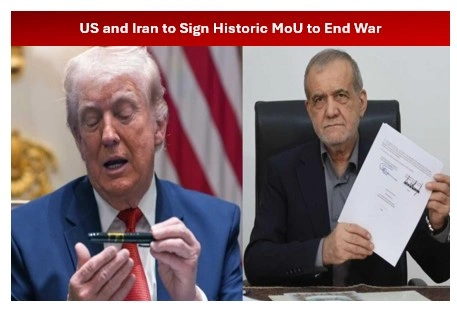
The United States and Iran have come closer to formally concluding their protracted conflict through the Memorandum of Understanding (MoU). The MoU establishes a framework for future negotiations, peace and regional stability. This agreement, which has been discussed for the past few weeks between the parties involved, will create an opportunity for the establishment of a permanent settlement after many months of military conflict, economic instability, and concerns related to regional security.
Both parties involved have reached an agreement on the contents of the MoU, which consists of a fourteen (14) point code of conduct. Among these fourteen points, both countries have agreed to an immediate cessation of hostilities between each country and resume normal shipping activity within the strategically critical Gulf of Oman region.
Key provisions included in the MoU are
As characterized by officials from both countries and other media sources, the MoU contains commitments from both parties that will help reduce tensions and to re-establish confidence in future dealings between both parties. Specifically, the MoU calls for an end to military actions and operations, the reopening of essential shipping routes, and the start of negotiations to resolve other long-standing disputes between the parties involved.
The United States has agreed to facilitate the release of Iranian assets frozen in the U.S., and further stated that it will lift other restrictions on the ability of Iranian shipping companies and ports to operate. In return, Iran has agreed to do its part in restoring normal shipping between the Gulf and the Gulf of Oman and reaffirmed its commitment not to continue with violence in the Gulf.
The latest reports indicate that there have been 60 days allotted for detailed negotiations to arrive at a comprehensive, legally binding peace agreement.
Read also: Trump and Iran Finalize Historic 14-Point Agreement to End West Asia War
The Reopening of the Strait of Hormuz is the Key
One major component of this agreement will be to re-open the Strait of Hormuz, a critical international energy transportation route which had been affected by the conflict. Ultimately, the resolution of this conflict created serious interruptions in maritime traffic through the strait leading to increased concerns over oil supplies globally and international trade.
Additionally, if this proposed arrangement is successful, maritime traffic through the strait will return to ‘normal’ levels (i.e., pre-conflict levels) and both parties will agree not to undertake any actions that could have an effect on maritime shipping. Analysts believe that re-opening the Strait of Hormuz will help provide stability to global energy prices and reduce the uncertainty of GDP worldwide.
Read also: Pakistan’s Spy Satellite Network Monitoring India Expands Rapidly
Concerns in Respect to Iran’s Nuclear Activities
While the primary purpose of the MoU is to end the conflict, it does provide a means for future discussions related to Iran’s nuclear program. Reports indicate that Iran has expressed its continued commitment to not acquiring nuclear weapons and that future negotiations will address enrichment levels, monitoring mechanisms and the possibility of sanction relief.
Many international observers have stated this aspect of the agreement is especially critical; there have been many years of issues between Iran and the U.S. regarding Iran’s potential to develop nuclear weapons.
Economic Relief and Reconstruction
Another critical pillar in the proposed framework is Economic Considerations. Several reports have suggested that the agreement might create a phased sanctions relief and an increase in the ability of Iran to access its financial resources as long as Tehran adheres to the agreed-upon parameters.
The drafted framework reportedly also discusses a broad spectrum of Economic Cooperation and Reconstruction initiatives; however, the scope of these activities will depend on the outcome of future negotiations and the implementation of the provisions of the MoU.
Breakthrough Agreement Signals End to Months of Hostilities
Many international actors have expressed their positive reception of the announcement, as they perceive it as an opportunity to prevent further escalation within the region. Supporters of the framework believe that it provides a viable avenue to establish peace and reduce the likelihood of future conflicts through military action.
In contrast, there are many analysts and policy experts who have expressed a number of concerns related to the vagueness of some components of the framework and the possibility of varying interpretations of the framework depending on which side of the negotiation one is on. Additionally, critics of the framework are concerned that sanctions relief and economic assistance would be provided to Iran before it has implemented all of its security-related obligations as specified in the agreement.
What Happens Next?
The Memorandum is meant to be used temporarily until a formal peace treaty is reached; however when negotiators begin their work of turning the MoU into a legally binding, comprehensive treaty both negotiators will be working under the assumption that such a treaty can only be successfully completed if both sides demonstrate good faith throughout the negotiation process. Thus how successful these negotiations will be will determine if this diplomatic breakthrough between the countries of the United States and Iran results in a sustainable realisation of lasting peace between the two nations, or whether it ultimately results in continued military conflict.
Currently, this agreement signifies perhaps one of the greatest efforts (diplomatically) made between the US and Iran for many decades. If it was implemented effectively, it may contribute to lessening tension within the immediate region, provide enhanced maritime security, and significantly alter the political/economic dynamics throughout the greater Middle East.
