


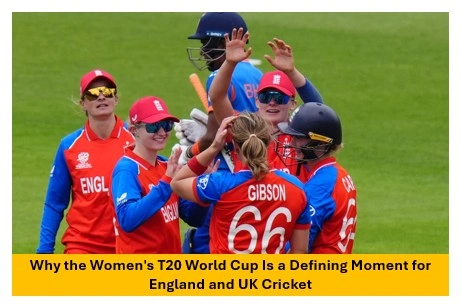
England’s Women’s T20 World Cup campaign begins on Friday against Sri Lanka at Edgbaston, with the tournament carrying significance far beyond the results on the field. As attention is divided between football in North America and other major sporting storylines, England’s women have an opportunity to make a lasting impact on both the sport and its future growth in the UK.
For captain Nat Sciver-Brunt and head coach Charlotte Edwards, the event also represents a chance to end a lengthy wait for global success while helping women’s cricket reach a wider audience.
England Face High Expectations on Home Soil
The pressure surrounding England’s campaign is considerable.
England have a remarkable record when hosting Women’s World Cups, having won all four editions staged in their home country dating back to 1973. However, that success has not been replicated in recent years.
The team have failed to win any of the last six Women’s World Cups across both the T20 and 50-over formats. Their recent struggles have also included missing out on a medal at the 2022 Commonwealth Games and repeated disappointments in attempts to reclaim the Ashes.
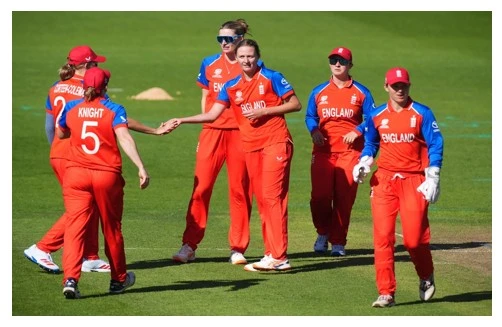
Charlotte Edwards and Nat Sciver-Brunt Lead a New Era
It has been 15 months since England appointed Charlotte Edwards as head coach and handed leadership responsibilities to Nat Sciver-Brunt.
The pair inherited a difficult situation following the 2024-25 Ashes whitewash, which prompted England to turn to Edwards after the end of Jon Lewis’ tenure.
Edwards, one of England’s most celebrated former captains, has since overseen a rebuilding process while managing the fitness concerns that affected the team in previous months.
Read more: India Retain No. 1 Position in ICC Men’s ODI Rankings After Annual Update
Signs of Progress Ahead of the Tournament
Although England endured a disappointing 50-over World Cup campaign last autumn, recent performances have generated optimism.
Series victories over New Zealand and India have strengthened belief within the squad and increased expectations ahead of the global tournament.
Read more: Women’s T20 World Cup 2026 Understanding the Tactics
Key Players Finding Form
Several players have emerged as important contributors during England’s recent run of matches.
Alice Capsey transformed her role over six games in May and early June, developing from a reserve batting option into a crucial middle-order player.
Meanwhile, Sciver-Brunt’s half-century on Wednesday marked a successful return after six weeks sidelined with a calf injury.
England have also benefited from the inclusion of seam-bowling all-rounders Freya Kemp and Dani Gibson, whose arrivals following last year’s 50-over World Cup exit have added greater balance and energy to the side.
A Potential Turning Point Against India
One of England’s most significant moments this year came during the series against India.
With England trailing 1-0 in the series and struggling at 117-4 in the 17th over during the Bristol match, Freya Kemp produced an unbeaten 39 from just 13 balls.
That innings helped change the momentum of the contest. England recovered to level the series before securing an impressive series victory in Taunton.
Whether that resurgence represents lasting progress or another temporary improvement remains one of the major questions heading into the World Cup.
A Tournament Reflecting the Growth of Women’s Cricket
The competition arrives during a period of increasing development within the women’s game.
Several nations outside the traditional powerhouses are beginning to make their presence felt on the international stage.
Scotland have qualified for the tournament for only the second time and are pursuing their first victory at a Women’s T20 World Cup after recent warm-up wins over Pakistan and Bangladesh.
Ireland have also produced encouraging results, defeating Pakistan, Bangladesh and West Indies in recent matches.
Both Scotland and Ireland share England’s group alongside New Zealand, Sri Lanka and West Indies, creating the possibility of surprise results during the group stage.
A Changing Generation of Players
The tournament may also mark the closing chapter for some of the game’s most influential figures.
New Zealand all-rounder Suzie Bates has already announced that this month will bring her international career to an end.
Australia have also seen one of their iconic players depart after Alyssa Healy retired earlier this year.
Questions Around Heather Knight’s Future
Attention is also turning toward former England captain Heather Knight.
Knight has already begun planning for life beyond her playing career through a management role in The Hundred, prompting speculation that a transition period could be approaching.
A World Cup triumph would provide a fitting conclusion to a career that has helped shape the modern era of women’s cricket.
Her greatest achievement came in 2017 when she captained England to World Cup glory at Lord’s.
Bigger Venues, Bigger Expectations
The scale of this year’s event highlights how much the women’s game has grown during Knight’s career.
While the 2017 tournament staged group matches in Leicester, Derby, Taunton and Bristol, the current edition features some of England’s most iconic venues.
Matches will be played at Lord’s, The Oval, Old Trafford, Headingley, Southampton, Edgbaston and Bristol.
These larger grounds reflect the expanding popularity of women’s cricket but also create fresh challenges for organisers seeking strong attendances throughout the competition.
Record Ticket Demand Before the Opening Match
Tournament organisers received an early boost when ticket sales surpassed the previous Women’s T20 World Cup record of 136,549 tickets sold for the 2020 edition in Australia.
That milestone was achieved more than a month before the first ball of the tournament was bowled.
Despite that success, concerns remain that empty seats at some fixtures could still become a topic of discussion.
Sciver-Brunt Embraces the Pressure
Speaking before England’s opening match, Nat Sciver-Brunt acknowledged the expectations that come with hosting a major global event.
She said:
“There’s extra pressure from everywhere.”
“Being the host nation, my first home World Cup leading, the Lionesses and the Red Roses doing such a brilliant job in their tournaments in the last few years, the state of women’s cricket, the list goes on in terms of where you could add up the pressure.”
Sciver-Brunt added:
“I guess we’re sat here feeling that pressure is a privilege, we’re at a time in the world where women’s cricket is waiting for a platform to expand and explode.”
Conclusion
England enter the Women’s T20 World Cup carrying both expectation and opportunity. Beyond their pursuit of a first World Cup title in several years, the tournament offers a chance to accelerate the growth of women’s cricket across the UK.
With record ticket sales, major venues, emerging international teams and a generation of influential players potentially nearing the end of their careers, the competition represents a pivotal moment for the sport. England’s performance over the coming weeks could play a significant role in determining whether women’s cricket fully capitalises on the platform now available to it.
