


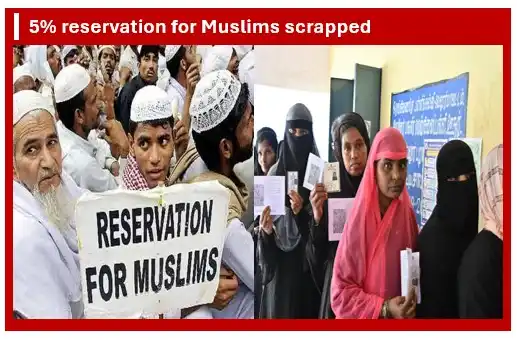
“What has been done is historic and unprecedented,” said a senior government official, who did not wish to be identified – acknowledging the move’s political depth but also its layers of social impact in Maharashtra.Dear reader,We have been keeping you up-to-date with information on the developments in India and the world that have a bearing on our health and wellbeing, our lives and livelihoods, during these difficult times. The Government Resolution (GR) Indira dated February 18, 2026 issued by the Social Justic and Minority Development departments has put a lid on a policy issue that was not just a point of legal dispute but also an emotive one for over ten years.
For the young residents of Mumbra and Malegaon hoping to secure a job, it’s not just a change in formality — they saw an opening door now slammed shut. To understand why this occurred now, we must look beyond the headlines and into the tangled confluence of constitutional doctrine, “agentic” governance (the president as an agent of change) and simple weight of historical data.
Release of the Decision: The “Final” Gummint Position
The notification was put up in the wee hours of Wednesday, making it clear that all previous orders, circulars or administrative ways associated with the 5% reservation enjoyed by Muslims under Special Backward Class (SBC) category will have no effect any more.
Why the Decision Was Made Now
The main reason, according to the government, is legal clarity. The 5% reservation was first brought in through an ordinance by the Congress-NCP government on July 2014, months before assembly elections. However:
- Cause of concern The High Court Stay: In November 2014, the Bombay High Court has stayed reservation in government jobs but for educational institutions, it remained intact.
- Lapsing of the Ordinance: As other governments did not enact it as a formal law within six months, however, the legal ground for quota “lapsed”.
- Administrative Housecleaning: By officially jettisoning the resolutions in 2026, the current administration is cleaning “the barnacles off of the ship” and setting aside “zombie policies”—regulations that are still on the books but don’t apply—in order, among other things, to smooth out procedures for admissions and recruitment for next year.
Specification: Numbers and Groups Involved
When we discuss the 5% reservation, it’s essential to understand it wasn’t a blanket quota for every member who professes the faith. It was meant for 50 sub-castes among Muslims which were declared as socially and educationally backward.
Impact on Education and Jobs
These “specifications” of the reservation are meaningless with the abolition of this quota:
- Reservation: The 5% reservation in seat intake is done away with in Government Aided Colleges and Professional Courses (Engineering, Medical, MBA).
- Waivers: Benefits associated with the SBC-A category will probably cease for Muslim students.
- Issuance of Certificate: The government has done away with the issuance of new “Special Backward Class” caste certificates for these 50 sub-castes.
The Humanized Reality: A City in Transition
Behind the legal-sounding words “ordinances” and “resolutions” there is a human story. For most people, that 5% was considered to be the “ladder of dignity.”
The Student’s Perspective
Think of a child from a family of weavers in Bhiwandi. For them, a 5% quota in an elite government engineering college was not “hand-out”; it was about making up for generations of deprivation. With the policy cast off, these students now have to vie for limited spots from among “Open” or “EWS” (Economically Weaker Section). Said Dixit: “Even though the EWS quota is there, it’s diluted and everyone gets a slice of it, so for those coming from historically suppressive pockets within society like us, the competition just becomes that more tough.
The Representation Gap
Currently the estimates for 2025–2026 data suggests that Muslim presence in government jobs in Maharashtra is around 3.3 per cent, whereas they are nearly 11.5% of the total population of this state. Opponents maintain that the gap will grow without positive discrimination, pushing social exclusion even higher.
Conclusion: What Happens Next?
The nullification of the 5% reservation is an end to a particular legal chapter, but not to the social and economic state of existence for the community. The government has indicated it will instead prioritize “development linked” schemes — scholarships, skill development, and infrastructure in areas heavily populated by minorities — over caste-based quotas.
For people in Maharashtra, the attention will now switch to court. A few minority organisations have already indicated that they are going to challenge the BombayHigh Court’s stay on this latest GR, pointing out that the “educational” quota was specifically allowed by it in 2014 and should not have been set aside.
