


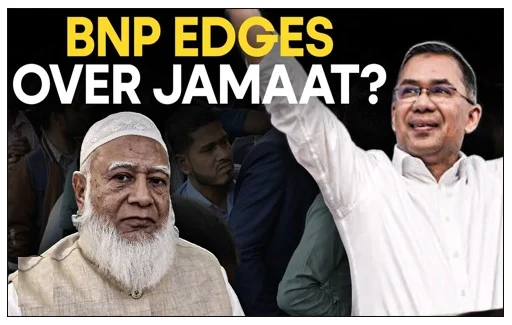
There has been a tectonic shift in Bangladesh politics. Bangladesh Nationalist Party (BNP) clearly emerged as winner in the general elections of 12th February, 2026 leading to end of the interim government led by Nobel Laureate Muhammad Yunus almost after one and a half year. In unofficial results still coming in, the BNP seemed not only headed for a simple majority but barely falling short of two-thirds “landslide” territory — with its major challenger, Jamaat-e-Islami, left far behind.
It is a historic election — the first since the 2024 “Gen Z” revolt that ousted Sheikh Hasina after a 15-year rule. With the main opposition Awami League suspended and its “boat” symbol omitted from the ballot for the first time in 30 years, the race had turned into a head-to-head between traditional nationalism and a resurgent Islamist-youth alliance.
Regeneration of the BNP: Ten Years in the Making
For almost 17 years, the BNP has operated from its underground, its leadership in exile and its activists subjected to systemic clampdowns. Today, the party is on the brink of taking power.
Tarique Rahman’s Decisive Return
The face of this victory, however, is Tarique Rahman, the son of former Prime Minister Khaleda Zia. Rahman, who took charge of the party after his mother died in December 2025, had been running it from London for years. His wins in two crucial constituencies — Dhaka-17 and Bogra-6 — amounts to personal as well as political redemption. Initial figures indicate the BNP will have between 185-209 seats, well beyond the magic halfway total of 150.
A Mandate for Stability
Voters may have considered the restoration of “democracy” a more attractive option than radical overhauls touted by various Islamist factions. The party’s campaign was based on economic recovery, keeping inflation in check and an oath to set a limit of two terms for the Prime Minister—the latter being a stark bend-the-knee gesture against what was perceived as autocracy during the previous regime.
Why Jamaat-e-Islami Fell Short?
The Jamaat-e-Islami, the main body in an 11-party Islamist alliance that includes the student-led National Citizen Party (NCP), had been expected to put up a much tougher fight. Although they have risen as the “second pole” of Bangladeshi politics, their showing — about 56 to 62 seats won — indicates that they were unable to narrow the divide between a command from its base in the religious countryside and appeal beyond it, to a more secular-leaning urban electorate.
Takeaways from the 2026 Election
For the scale of this swing, let us consider the particular dynamics that marked polling day:
Paradox of Voter Turnout: Officially, the turnout was around 47.9%, but the interim government calls it a moral victory for “peaceful” voting. But the Awami League, which was in exile, rejected the turnout as “negligible” and declared that the election was “illegal.”
- The Referral Factor: In addition to the parliamentary vote, voters turned out for a referendum on the July National Charter, which is a 84- point reform package designed to decentralize power.
- A Peaceful Polling Day: Unlike the violence-tainted elections of 2014 and 2018, the vote in 2026 unfolded comparatively peacefully, even if it was secured by nearly 900,000 personnel, including military troops.
- The Minority Vote: Early reports showed relatively low turnout among the Hindu minority, many of whom were alienated after the 2024 unrest.
- International Recognition: India’s Prime Minister Narendra Modi, and the U.S. State Department have already congratulated Tarique Rahman in an advance recognition of a regime-change handshake with the people’s choice new government.
- Economic Anxiety: The sky-high cost of living was the dominant issue for many voters. The BNP’s pledge of generating 10 million jobs within 18 months struck a chord.
The End of the Dynasty War? With Sheikh Hasina in exile and the Awami League prohibited, the ”Battle of the Begums”, as this contest was known, is over; now it’s a fight for control between Rahman’s men and the Islamist leadership.
- Digital Literacy & Disinformation: U.N. officials decried a “tsunami of disinformation” during the campaign, but Gen Zers used social media to watch polling stations in “real time.”
- Expat Influence: For the first time, nearly half a million expatriates voted using postal ballots, a major step in acknowledging the role of the diaspora.
- The Road to Reform: BNP has promised to abide by the “July Charter,” so we can probably look forward to some serious constitutional rejigging within a few months.
