


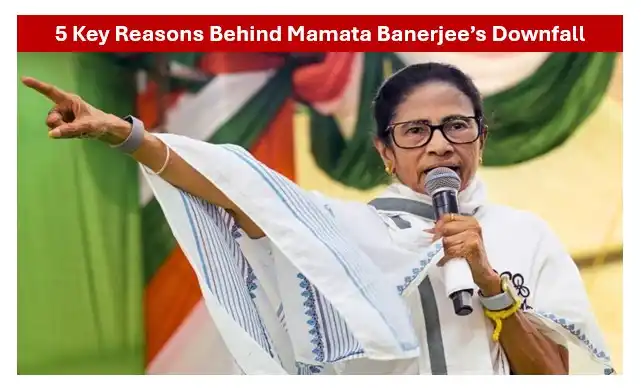
The political dynamics in West Bengal have been influenced for years by powerful personalities and fluctuating voter feelings. Formerly viewed as the unstoppable politician who dismantled decades of Left Front dominance, Mamata Banerjee is now confronted with several challenges that threaten her position. While she is a strong leader, a variety of reasons have contributed to the perception of vulnerability for her government.
1. Governance Fatigue & Anti-Incumbency
After more than 10 years in power, Mamata Banerjee’s government is facing classic anti-incumbent pressures. Voters who once supported her “paribartan” (change) message are now becoming more critical of the same government they helped to elect. Factors like bureaucratic inefficienycy, allegations of patronage and the inability to deliver public services have created a growing discontent.
In less urbanised and rural communities, particularly, there is an increasing sense of discontent among the population regarding whether or not the level of development in the region has met their expectations. This fatigue does not equate to outright rejection, but the emotional connection with her has weakened, and the connection that fuelled her victories over the past several years no longer exists.
2. Corruption Allegations and Scandals
The government of Mamata Banerjee has suffered major blows to its credibility since many allegations of corruption have surfaced regarding its most prominent leaders. The media has been full of stories about these high-profile cases, especially around recruitment fraud at the municipal and educational level.
Corruption seeping into the administration erodes the moral high ground Mamata claimed from earlier regimes. Although she has publicly distanced herself from those accused, the opposing parties have skillfully used these incidents as a means of undermining Mamata’s control of her party and the governance apparatus.
3. Increased Political Opposition
Over the past several years, the political opposition in West Bengal has grown both more aggressive and more organized. Furthermore, the increase in national parties in West Bengal has shifted the dynamics of politics from largely bipolar competition into a much more competitive field.
This has forced Mamata to defend existing turf instead of expanding it. In addition to consolidating anti-incumbent votes through a narrative around governance failure, the ability of the opposition to effectively frame a narrative around these governance failures has chipped away at Mamata’s previous “invincible” image. Clashes between political groups on the streets, high levels of rhetoric, and heavy campaigning have all contributed to increased political tensions, which have in turn resulted in increased voter polarization.
4. Law and Order Concerns
The state’s political debate has been dominated by law and order issues. Many different people have raised concerns about the number of violent incidents during elections, such as political violence between rival political parties and the intimidation of voters.
While violence is common in West Bengal politics, the increase in the number of violent incidents raises questions about the administration’s will or ability to control these types of issues. Critics of the administration claim that the perception that the law is enforced in a selective manner will further harm the government’s image. For many undecided voters, law and order concerns will be a determining issue along with many other governance-related issues.
5. Leadership Approach and the Concentration of Authority
Mamata Banerjee has been said to have a very centralized approach to leadership, which has both aided and hurt her. Her close ties to the common people and her near-constant involvement with them are what helped her gain political power, but over time the excessive levels of centralization have led to comments regarding decision-making depending on a very small and exclusive group of individuals.
Excessive centralization of authority can also lead to the creation of “bottlenecks” in governance, which would limit the amount of second-level leadership that could emerge in the party. Without a substantial presence of strong local leaders that can manage political emergencies independently or rally public support during difficult times, the party will have a diminished ability to withstand crises.
read more:
- Mamata Banerjee Issues Her First Statement as TMC Loses
- Why will votes be counted on 293 instead of 294 in West Bengal?
- West Bengal and Tamil Nadu witness highest-ever voter turnout
Conclusion
The current political climate in West Bengal presents a greater challenge to Mamata Banerjee than any point over the past decade due to the convergence of anti-incumbency, allegations of corruption, a resurgent opposition, upheaval in law and order and questions over her leadership ability.
Whether this convergence results in a major political change in West Bengal or is just a temporary setback for her would largely depend on the manner in which she addresses these public concerns and adjusts her strategy. However, all indications are that we are now entering a period of greater contention and uncertainty in West Bengal than the one that she previously held for the past several years.
