


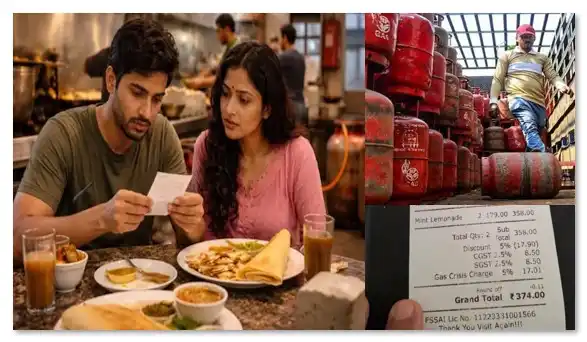
Restaurants in Bengaluru are having trouble because there aren’t enough business LPG tanks. Some have had to add a gas charge to customers’ bills. As they try to keep their businesses open, restaurant owners say the move is only temporary as the cooking gas prices are rising and stocks are running low.
Food companies that rely on LPG for daily operations are struggling because of the problem. Many restaurant owners say they have no choice but to temporarily close or raise prices to cover the extra costs.
Restaurant operations are slowed down by a lack of LPG
The lack of LPG has made things very hard for food sellers and restaurants in many towns. As supplies run out, many restaurants are struggling to keep operations running normally.
Restaurant owners say they aren’t receiving cylinder deliveries daily, so they have to limit how much gas they use. Some restaurants haven’t gotten new tanks in days, which has made people worry that stoves might run out of fuel soon.
Some businesses have already had to cut back on their meals or cooking hours because of the situation. Some are getting ready to close temporarily if the shortage doesn’t end soon. People who sell food say it’s almost impossible to run a business kitchen that uses LPG for cooking without a steady gas supply.
read more: Iran war impact on India
Gas charges show up separately on restaurant bills
Due to the economic crisis, some restaurants in Bengaluru have started charging customers a small extra fee for gas. Instead of raising menu prices, these fees are shown separately.
Restaurant managers say the goal is to be open about the rising cost of fuel for cooking. Some places would rather add a small fee to each order than raise the prices of all the items on the menu.
There are times when an extra charge of a few rupees to fifteen rupees is added to the bill. This depends on the order. Some bills circulating online have labels that say things like “gas supply issue” or “gas charge added to the total amount.”
The restaurant owners say that they usually let customers know about the extra fee before adding it to the bill. Their goal is not to abuse customers but to recoup some of the extra money they spent on fuel.
read more: Government Orders Oil Refineries to Boost LPG Production
More pressure is being put on by rising cylinder prices
Because of the LPG shortage, the cost of industrial tanks has gone up, making things even worse for restaurants. Cylinders used to cost around 1,900 rupees, but vendors say the price has increased significantly in many places.
Some diner owners say they have to pay very high prices for cylinders because they are so hard to find. Restaurant owners say their total costs have risen significantly because of rising fuel prices and other expenses such as rent, power, and staff pay.
Many restaurants have small profit margins, and sudden increases in fuel prices can quickly turn gains into losses. A number of business owners say they have already lost money because of the lack.
read more: Government Extends LPG Booking Gap to 25 Days
Restaurants have a hard time staying open
Restaurant owners say they don’t know how long they can stay open because of the situation. As they try to deal with rising prices and limited gas sources, some stores say they’re losing almost 30% of their business.
A lot of people are worried about small restaurants and street sellers who only use LPG tanks to cook. Unlike big restaurants, many of these places don’t have any other cooking tools.
They say they only have enough gas for a few more days to keep their stoves running. So, they are going to different gas stations to see if any empty tanks are available.
Many restaurant owners say they don’t want to raise menu prices too much because they don’t want to lose customers, even though it’s hard.
The food industry has an uncertain future
The food business is worried about what might happen if the LPG supply problem doesn’t get better soon. A lot of business owners are afraid that long term gaps will cause more of their stores to close.
Right now, places are trying different things to stay open. Some are removing items from the menu that use a lot of gas, and others are adding small fees to customers’ bills to help cover fuel costs.
But people in the business say these steps are only short term fixes. Many food businesses could have big money problems in the next few weeks if they can’t get a steady supply of commercial LPG tanks.
