


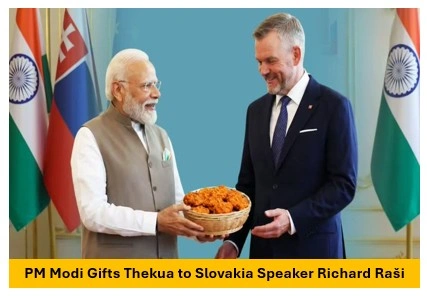
During his recent trip to Slovakia, Prime Minister Narendra Modi gifted Richard Raši, the Speaker of the Slovak National Council, a traditional sweet from Bihar, Thekua. This gesture represents both India’s diverse food culture and the growing use of cultural diplomacy to improve bilateral relationships.
Thekua is a traditional sweet that is often associated with Chhath, a major festival celebrated in Bihar and Jharkhand. It’s a symbol of faithfulness to the past, following customs, and celebrating as part of a larger community. Presenting the sweet to a Slovak leader provided an opportunity to showcase an important feature of India’s diverse culinary heritage on an international level.
Traditional Bihari Sweet Takes Center Stage in Diplomacy
Thekua has long been considered one of the most valued traditional sweets from Eastern India, as it is predominantly made with wheat, jaggery, and ghee, and it is one of the key foods offered to the Sun God during Chhath Puja, one of the biggest festivals held in Bihar and Jharkhand.
The gift has cultural meaning beyond its culinary qualities, as it is an example of both India’s determination to promote regional customs and traditional food products to foreign countries. Over the years, the Prime Minister has used his official engagements with heads of state to introduce India to the many food and cultural items found throughout our country.
Also read: PM Modi Says Farmers’ Welfare Remains a Top Priority for the Government
Cultural Diplomacy During Historic Slovakia Visit
When Prime Minister Modi visited Slovakia, it marked the first time that an Indian Prime Minister has come to Slovakia since Slovakia gained independence in 1993 and a milestone in the history of the relationship between the two countries. The purpose of his visit was to increase cooperation between India and Slovakia in multiple areas of interest including trade, technology, innovation, energy, and investment.
While PM Modi was in Bratislava, he met with both Slovakian President Peter Pellegrini and Prime Minister Roberto Fico. They both agreed to deepen cooperation and elevate their bilateral relationship to a Comprehensive Partnership, a reflection of the increasing strategic significance of this partnership.
Also read: Mamata Banerjee to join Congress after 28 years
Other Gifts Highlight India’s Cultural Diversity
In addition to giving Thekua, PM Modi gave other culturally significant gifts to Slovakian leaders. The gifts that PM Modi gave were meant to be representative of India’s rich, long-standing traditions in artistry, craftsmanship, and wellness. The gifts that PM Modi gifted to Slovakian leaders were carefully selected and included traditional handicrafts, textiles, and ancient Ayurvedic texts (for example: Susruta Samhita and Charaka Samhita).
These diplomatic gifts emphasize the cultural diversity that exists in India and the wide range of cultural gifts (for example: Kashmiri silk carpet, Dokra art, etc.) and culinary traditions (like Thekua) that exist within the country. By giving these gifts, it will foster greater cultural understanding and strengthen the bond between the two nations and their people.
Strengthening India-Slovakia Ties
PM Modi’s trip to Slovakia was notable for multiple reasons, including high-level discussions as well as opportunities for business and culture to interact with one another during the week-long visit. This trip heralded India’s increasing engagement with Central Europe and those with whom India will continue to establish enhanced and mutually beneficial partnerships in a variety of areas.
Bottom line
One notable gift of Thekuwa (a traditional sweet from Bihar) to Speaker Richard Raši serves as an example of how food can connect two different cultures together through this simple yet significant act of kindness on PM Modi’s part. While giving Thekuwa, PM Modi used this opportunity not only to celebrate India’s cultural diversity but also reinforce the idea that diplomacy is not only based on written and/or verbal agreements, but also includes shared customs/rituals as well as individuals from both cultures.
As India’s global reach continues to grow, similar cultural exchanges will be an integral part of India’s overall diplomatic strategy in helping to share with the world the rich heritage of India and all her people.
