


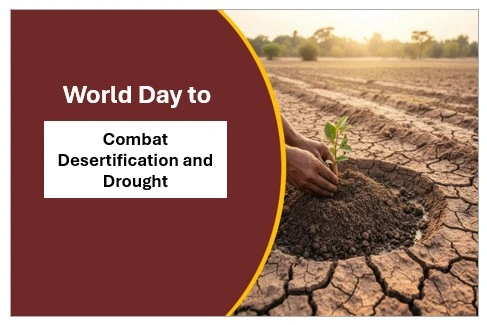
The international community is watching as the World Day to Combat Desertification and Drought is observed amid record-breaking global temperatures and disruptions to agricultural activities caused by unpredictable weather patterns. This annual event, promoted by the United Nations General Assembly in December 1994, is a powerful call to action to the world to face land degradation, encourage sustainable soil management and increase the resilience of the world to the devastating effects of prolonged droughts.
The global celebration of the year marks a special strategic value. The main international events are being organized in Africa, in partnership with the United Nations Convention to Combat Desertification (UNCCD) and with Kenya as the host nation, for the first time in almost ten years.
The focal point is mainly on a critical ecosystem that has been overlooked in history under the official global directive: “Rangelands: Recognize. Respect. Restore.”
The Crisis of the Overlooked Half
Rangelands are among the largest and most important ecosystems on earth, although they are not often the focus of global environmental campaigns like those for dense tropical rainforests and fragile marine coral reefs. Rangelands are those areas of land comprised of grasslands, savannas, shrublands, wetlands and deserts, and represent more than half of the Earth’s total land mass.
These are vast landscapes, but they’re under an unprecedented ecological emergency, one that’s going on quietly. The UNCCD estimates that as much as 50% of the world’s rangelands are in a severe state of degradation, or are running the risk of complete ecological failure.
It’s driven by a combination of anthropogenic stressors and climatic change. Inappropriate agricultural practices, excessive deforestation, long-term overgrazing by domestic animals and poorly planned urban development remove the protective shields from the soil. Add to that unpredictable rainfalls, multi-year droughts and the fertile topsoil will simply wash away and once productive areas of land become sterile and barren, a condition referred to as desertification.
Read also:
- Journey to Wellness Five Incredible Yoga Retreats Worldwide
- Reason behind hanging bottles on the fence of India-Pakistan border
Real-World stakes: Human and economic survival
The impact of unabated land degradation is much wider than affecting geography. They pose an immediate threat to international security, poverty eradication and global food systems.
Rangelands are used by nearly 70% of the world’s livestock feed, and their continued loss directly threatens the food security for approximately 2 billion people. The effect of this is most pronounced on pastoralists and Indigenous peoples who have lived on these lands for centuries. Without rangelands, livestock die, local economies collapse, and millions of families find themselves desperate and in mass climate migration; sometimes aggravating border resource conflicts.
The Action Plan: Recognize, Respect, Restore
The UNCCD is taking advantage of this major global event to coincide with the International Year of Rangelands and Pastoralists to break the trend of land degradation. Environmental ministers and policy makers are working together in accordance with three strategic pillars that lead to Land Degradation Neutrality (LDN):
• Understand Economic and Ecological Value: Governments need to actively include rangelands in national Climate Action Plans, recognising their size and importance in carbon sequestration and in regulating the natural water cycle.
• Recognize Traditional Stewards: Policy makers are encouraged to officially recognise the land rights and traditional land stewardship practices of local pastoralists who have established a valuable ecological knowledge spanning generations.
• Restore Through Targeted Investment: Shift from passive conservation to active land restoration by communities, such as through controlled rotational grazing, agroforestry and the creation of extensive rainwater harvesting.
| Restoration Priority | Local Implementation Strategy | Long-Term Global Benefit |
|---|---|---|
| Avoid New Degradation | Strict zoning laws preventing unsustainable agricultural conversion. | Preserves existing biodiversity corridors and intact carbon sinks. |
| Reduce Soil Erosion | Planting native deep-root perennial grasses and structural windbreaks. | Stabilizes topsoil and prevents topsoil loss during flash rain events. |
| Drought Mitigation | Developing advanced early-warning systems and artificial aquifers. | Protects vulnerable rural communities from total economic collapse. |
Looking Ahead to COP17
During this global day, momentum will be carried over directly to the next UN Sustainable Land Management Conference (COP17 on the fight against desertification), which will be held in Ulaanbaatar, Mongolia. The conference will be under the working theme “Restoring Land, Restoring Hope,” and is expected to result in the creation of legally binding international agreements as well as firm financial pledges to support initiatives for the restoration of dry lands.
Finally, the world is recognizing desertification as not just a charitable act for rural people, but a policy we must have for the planet as a whole. Prospective commitments to restore degraded rangelands can make a significant contribution to strengthening global supply chains, reduce the drivers of climate migration and ensure a safe, productive and food secure rangeland for the future.
