


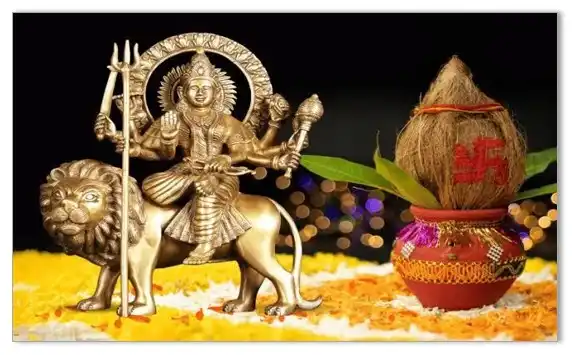
Navratri (means “nine nights”) is a major festival celebrated by Hindus to honour the goddess Durga in her divine feminine form. It is celebrated with great respect throughout India, representing triumph over evil and with the intent of recommitting oneself spiritually. Each of the nine nights highlight an aspect of the goddess and devotees pray for peace, wealth and security.
Rituals of devotion are carried out daily during Navratri, and start with invoking the goddess with flower and lamp offerings at the beginning of the festival, known as Ghatasthapana (Kalasha Sthapna). Devotees will perform Daily Aarti (Light prayer) and mantras daily as well as recite the Durga Saptashati or a number of other scriptures over the course of Navratri.
Fasting is a big part of the festival along with abstaining from wheat and/or onion and garlic products, and will only consume milk and fruits and special fasting foods. The fasts/prayer rituals are not confined to food but also intended to purify the mind and spirit.
The nine forms of Durga (Navadurga) are celebrated, while participants wear a different colour each day and offer prayers according to that colour. The forms of Durga are the following:
Shailputri, Brahmacharini, Chandraghanta, Kushmanda, Skandamata, Katyayani, Kalaratri, Mahagauri, and Siddhidatri.
Prayers for Peace and Prosperity
The purpose of Navratri is to want both inner peace and worldly wealth. To call on the Goddess for protection, worshippers recite traditional mantras such as “Om Dum Durgayei Namaha”. Lighting oil lamps (known as diyas) and giving sweets and fruit to the Goddess symbolize that the devotee is grateful and hoping for an abundance of all good things in life.
Through community prayer and through gatherings in temples, worshippers feel unified, and are positively influenced as they come together as a group. In many areas of India, special havan (fire) ceremonies are held during the festival that help to purify the environment and invite positive blessings of peace and prosperity to the homes of worshippers.
Culturally, while Navratri is primarily a religious occasion, it is also rich in cultural tradition. In states such as Gujarat, evenings are filled with Garba and Dandiya Raas dance, where participants wear traditional costumes and dance with family and friends to music and rhythm. In the eastern part of India, especially in West Bengal, Navratri and Durga Puja occur together and provide many opportunities for gathering, dancing and celebrating together, as well as creating beautiful pandals, decorating idols and providing processions for the celebrations.
Overall, celebrations within the community of worshippers reinforce their social bonds and serve to once again create a sense of joy and devotion in the community.
read more:
- Observing Papmochani Ekadashi and Meena Sankranti 2026
- What’s the difference between Shivlinga and Jyotirlinga?
- India’s only Shiva temple that was rebuilt by the British
Final Day: (Dussehra)
Dussehra, or Vijayadashami, is the tenth day of Navratri. It represents the last day of the nine-night celebration and symbolizes the triumph of good over evil. This is represented by Durga defeating the demon Mahishasura. On Dussehra, those who have fasted for nine days will end their fasts, submerge their idols of Goddess Durga in water, and greet one another with good wishes as they begin their lives anew with hope
A Festival of Renewal
Navratri represents both the triumph over negativity and the celebration of positivity in life. Through disciplined activity, unquestioning devotion, and joyous celebration, devotees strive to receive divine blessings and be transformed from within. Millions around the world continue to draw inspiration from this festival to walk on the path of righteousness, peace, and prosperity.
