


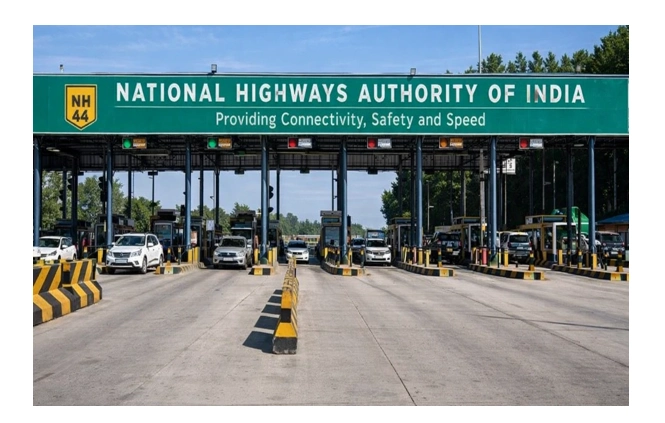
The sound of the highway has always been the beat of the modern India, a musical beat of business, immigration and family outings. That beat however, has been more of a headache to anyone who has been stuck in a Sunday afternoon traffic jam heading to a toll plaza. The Ministry of Road Transport and Highways (MoRTH) marked the start of a new era this week, in which the concept of the stop-and-go governance was finally put to death.
The government is not merely fiddling with a few lines of legalese with the official notification of the National Highways Fee (Determination of Rates and Collection) Amendment Rules, 2026; it is completely overhauling the connection of Indian commuter to the open road.
Beyond the Barrier: The emergence of GNSS-based Tolling
The most notable inclusion in the 2026 amendment is the official inclusion of Global Navigation Satellite System (GNSS) technology into the tolling system. Over the years FASTag became the highway hero and reduced wait time by minutes to seconds. The government has however realized that even taking three seconds to pause is a bottleneck in an economy that is moving at the pace of India.
The new rules have made the virtual toll a legal reality. The cars with installed On-Board Units (OBUs) with GNSS will not have to reduce their speed and stop at a scanner.
Read also: NHAI Increases FASTag Annual Pass Fee Starting April 1, 2026
Stiffening the Lines: Digital Enforcement and Compliance
Being the most convenient rules ever, there comes with it a velvet glove, iron fist style of enforcement. The amendment provides a powerful law against the digital era of evading toll.
In the past, the application of it was more of a hectic experience with physical marshals and interventions. This is replaced by an Automatic Number Plate Recognition (ANPR) systems and a central enforcement database in the 2026 rules. In case a vehicle is traveling across a GNSS stretch and lacks an OBU that works or has a valid FASTag, the system will automatically send out a violation notification.
Humanizing the Tech: Effect on the Everyday Drive
Behind the technical terminology of GNSS and OBUs, is a very human tale. Consider Rajesh who is a long-haul truck driver and who is on the road 25 days a month. In his mind, any toll plaza is a possible location of tension, time loss, and small-scale corruption. The 2026 amendments imply that Rajesh will be able to carry on with his momentum. This would imply that he reaches home to his family at Indore four hours earlier since he did not get caught in a three kilometer traffic jam at Maharashtra border.
There is also the rules of a Zero-Toll Zone of local residents within a 20-kilometer range of a tolling point as long as they are using non-commercial vehicles. The 2026 amendment has clarified this long standing grievance and it is clear that the development of a highway will not be a financial burden on the same villagers whose land the development will be taking over.
