


To the millions of Indians who view the highway as their second homeland the long-haul truckers, the weekend road-trippers, and the daily inter-city drivers, the screech of the tires on the tarmac is traditionally a voice of freedom. That freedom will however come at a little higher cost.
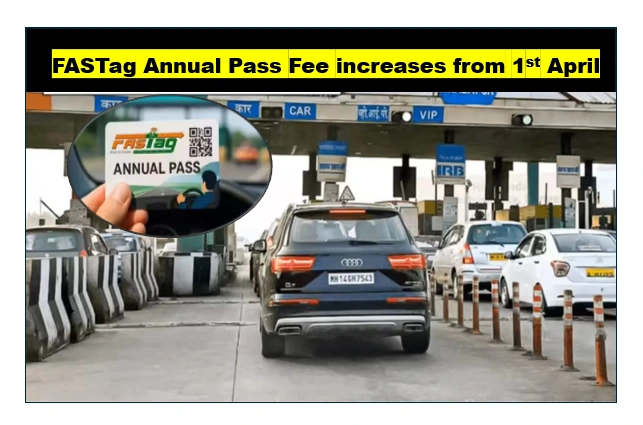
National Highways Authority of India (NHAI) has formally listed changes in FASTag Annual Pass charges, which are bound to be brought into effect on April 1, 2026. Although increasing the price is not something to celebrate, this action is being packaged not only as a financial improvement, but as a step to a more digital, seamless, and high-tech future of transit.
The Price of the Open Road: The Numbers behind the Numbers
The Annual Pass has been the Holy Grail of the frequent traveler. It provides a flat rate convenience which spares the everyday commuter the death by a thousand cuts of daily toll deductions. With the new directive, the price of such passes will increase by a margin of between 8 and 15 percent depending on the type of vehicle and the highway stretch concerned.
In the case of a typical passenger motor vehicle, a yearly pass that used to range around ₹3,000 may now increase to a higher range of ₹3,400. Forty or fifty rupees a month could be negligible in its own right, but the overheads can be very high in a logistics company when it comes to the fleet of five hundred trucks.
Read also: Hidden Economy-Class Perks Most Travellers
Why Now? The Rationales behind the Increase
In order to see the why we must go beyond the spreadsheets. There is a radical change in the highway infrastructure of India. We are no longer constructing roads but smart roads.
This increase in fee is reportedly to be spent on three human-centered objectives:
- Safety Infrastructure: A lot of it is being diverted to AI-controlled “Incident Management Systems.” This translates into a higher response time of ambulances and breakdown clearance speed, which literally saves lives in expressway highways.
- Global Navigation Satellite System (GNSS) based tolling is being vigorously experimented in The Transition to Satellite Tolls: NHAI. This would ultimately get rid of the physical toll plaza altogether, and charge you on the actual kilometers travelled. The switch to this pay-as-you-use model would involve an enormous initial investment in the technology of the back end.
- Improved Side Street Facilities: We have all been in this situation, when we are searching to have a clean restroom or a place to park safely at 2:00 AM. It is the expansion of the well-known program of the Way Side Amenities (WSA) that will be used to implement changes so that the highway trip will not be an ordeal but the experience of a contemporary travel.
The Convenience vs. Costs of The Commuter
The anxiety that is associated with the Low Balance beep at a toll plaza is a particular kind of anxiety. FASTag was expected to terminate that. For the most part, it has. It minimized the overall waiting time at toll plazas from 8 minutes 47 seconds. It is time back to fathers arriving home to their children, and time back to business providing necessary items.
But, the higher the prices the higher the expectation of service. When a traveler is paying a premium on an Annual Pass, he or she would expect the Fast in FASTag to have a literal meaning. Popular users have complained about ghost tolls (technical errors of a tag being read twice), and the absence of a smooth dispute resolution procedure.
Tips for the Savvy Traveler
The April 1st deadline is not that far off, a couple of methods may soften the blow:
- Renew Early: Check whether your provider offers an early renewal at the 2025 rates in case your current pass will run out some time before the deadline.
- Audit Your Travel: Hybrid work has led to a realization that some day-in day-out commuters are not going to the highway as much as they used to. See whether the new Annual Pass rate may be more expensive than the “Pay-per-use” model could be.
- Use 1 Wallet: To not have to require several minimum balance requirements before using various vehicles, use one wallet that is connected to a bank, giving cashback or fuel points.
Read also: Census 2027: Headcount to begin from April; to be held in two phases
