


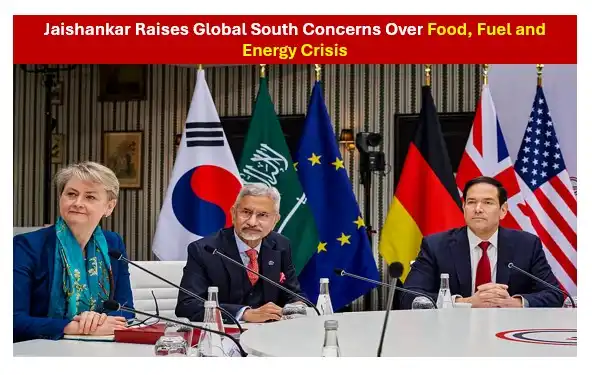
During the G7 meeting of foreign ministers, S. Jaishankar talked about some of the biggest problems that poor countries face. At the global platform, he discussed how concerns about food, fuel, and energy security are growing, especially for countries in the Global South.
He made it clear that many of these countries are having a hard time because prices are rising and supplies are being disrupted. He said that these problems aren’t just happening in a few places, but in many places around the world. This makes it a major global matter.
Conflict in West Asia Makes Things Tougher
Jaishankar said the situation is worse due to the current unrest in West Asia. He said that disputes in the area have disrupted global supply chains and made markets less stable. This has had a direct effect on the prices and supply of basic goods like food and fuel.
He said that these kinds of global issues have effects that go far beyond the area of strife. This is even harder for developing countries because they rely heavily on imports and don’t have much money to cope with sudden price increases.
He also said that global trade has been harmed, putting more economic pressure on countries already dealing with shortages and price increases.
read more: Government cuts excise duty on petrol and diesel
Need for Better Supply Chains
One important thing he talked about was the need to improve and stabilize supply lines. Jaishankar said that recent events around the world have shown how fragile systems can be in a crisis.
He said that nations need to work together to build strong trade networks that can keep moving important goods even when times are tough. This means ensuring that countries get food, power, and other essential goods quickly and without major problems.
He also talked about how important it is to improve the supply lines for relief work. He said that weaker areas should have easier access to help in such situations, and that this should be a top priority for everyone working together.
read more: Parliament Passes Transgender Rights Amendment Bill 2026
Try to get global changes made
Jaishankar also asked for changes to the ways the world is governed. He said that the way international organisations work now needs to change to better meet the needs of all countries.
He stressed how important it is to make global processes fairer and more useful. This includes making it easier for countries to work together so that problems like food shortages, energy crises, and wars can be solved more quickly.
He also said that important global groups need to be reformed so that choices also take into account the needs of developing countries.
read more: Women Empowerment Gains Momentum
Pay attention to food and fertiliser security
Getting enough food and fertiliser was another big problem that came up. Jaishankar said that problems with fertiliser supply can have a direct impact on farming and food production.
Crop yields can decline if farmers can’t get enough manure or if prices rise. This makes it harder to get food and raises prices, making things even worse for businesses already struggling.
He said that ensuring people can always get fertiliser at a reasonable price is very important for maintaining food security. Agriculture is a major part of the economies of many emerging countries, and any problems with it can be severe.
Talks of peace on the sidelines
In addition to the G7 meeting, Jaishankar also met with several foreign ministers and world leaders to discuss business. The main goals of these talks were to improve ties between the two countries and address current global problems.
The talks gave people a chance to share their thoughts on what was happening in West Asia and to look for ways to solve problems that affected everyone. These kinds of exchanges are necessary to promote unity and discover shared worries around the world.
A Strong Message to Everyone
In his comments at the G7 meeting, Jaishankar made it clear that the problems of the Global South need to be addressed immediately. He said that problems like food, fuel, and energy security are not just local but global, and that everyone needs to work together to solve them.
India wanted to ensure that the opinions of poor countries were heard by bringing these issues to the world’s attention. The main goal was to get people to work together more, streamline processes, and act quickly to address these growing problems.
In the end, the conversation showed that the world needs a fairer attitude. All countries will have to work together to ensure stable supplies of food, fuel, and energy. It was made very clear that problems that affect everyone must be solved by everyone, and that the worries of emerging countries must be taken seriously.
