


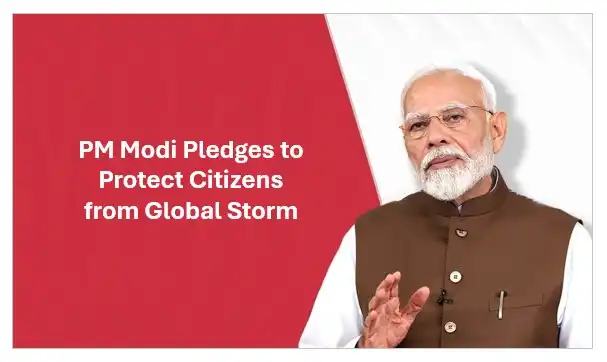
It is in an age where the butterfly effect is no longer an expression of metaphor, but a daily economic fact, that the vibrations of wars at a distance are being felt, not only in the diplomatic chambers, but even in the kitchens and in the fields of simple Indians. There was an urgent task on March 22, 2026, when Prime Minister Narendra Modi held a high-level Cabinet Committee on Security (CCS) meeting to ensure that the maturing conflict in West Asia does not derail the lives of 140 crore Indians.
The message of the Prime Minister was clear cut. It is a situation that is in the process of evolving, and as the world sits with bated breath, India is inward looking, to the security, pocketbooks, and peace of mind of its citizens.
A whole-of-government Shield against Global Volatility
The West Asian crisis at hand with some of the largest energy centers as well as an important shipping route such as the Strait of Hormuz can spread to the entire global economy. Having realized this, PM Modi has instructed a whole of government strategy, dismantling bureaucratic silos in order to develop a brand new defense against inflation and supply chain shocks.
The Strategy of Resilience
The Prime Minister ordered the establishment of a special team of Ministers (GoM) and a team of secretaries to watch over the situation 24/7. It is not merely a high level policy but rather a microscopic evaluation of:
- Agriculture and Fertilizers: It should be ensured that the future Kharif season is not affected by grain world shortages of urea and natural gas.
- Energy Security: Having strong strategic oil and coal deposits to avoid any waver in the power grids in the country.
- Essential Commodities: A rigid directive was set to collaborate with the state governments to prevent hoarding and black-marketing, so that the common man will not suffer the cost of international insecurity.
you may also like:
- PM Modi greets people on Parsi New Year Navroz
- Govt amends National Highways Fee Rules 2026
- Parliament to Discuss Railway Grants and Budget Expansion
Making the Logistics more Human: Securing the “Thali” and the “Tractor“
When the world oil prices are shot up, the discussion would remain on the “macroeconomic indicators. In the case of the Prime Minister, all this comes down to the price of the daily thali and the diesel that the tractor of the farmer will run on.
Shielding the Farmer
The agricultural sector of India is particularly prone to changes in the world. PM Modi emphasized that the government will ensure that fertilizers such as urea are availed at subsidized prices, regardless of the fact that prices of the fertilizer will increase drastically internationally. The government is creating a buffer by diversifying the channel of imports of chemicals and petrochemicals such that the Indian farmer can plough on without the burden of global war on his or her shoulders.
The LPG Challenge
The rumors about the shortages in LPG have triggered anxiety in recent days. Going straight to the point, the Prime Minister encouraged the citizens not to panic. The government has already raised commercial LPG distributions and is offering supply as far as the United States in a bid to have all domestic tabs and stoves operational.
