


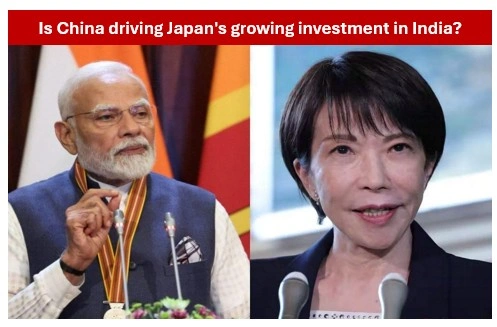
Over the last 10 years, Japanese investment in India has increased considerably and is present in various industries including automotive, infrastructure/building, manufacturing, electrical, logistics, and renewable energy. Japanese businesses have played a vital role in the development of India and have participated in multiple projects to support this growth (industrial corridors, metro rail projects, and automotive manufacturing sites).
Japan’s Expanding Economic Footprint in India
Analysts are increasingly questioning whether the economic and geopolitical growth of China is driving Japan’s growing interest in investing in India as its investment activity escalates. China’s evolving role within Asia will also influence Japan’s strategic thinking; thus, while India’s large consumer market and growth opportunities make it an attractive investment destination, the changing role of China in Asia is also likely to shape how Japan views its place in the region.
The question is no longer if Japan will continue investing in India, but if the apprehension surrounding China will lead to a quicker pace of investment.
also read: Why are Cafe Coffee Day shares rising after Siddaramaiah resigned?
Strategic Realignment in Asia
In recent years, Japan and China have had conflicting periods over issues of territorial boundaries, military expansion, and regional power. The East China Sea, China’s potential to increase its military presence, and competition for dominance within the Indo-Pacific region have caused Japan to reposition its economic strategy and policy as it relates to China.
Japanese government and business sectors are diversifying their economic partnerships to limit over-reliance on a specific market. Due to their rapidly growing economic status, large consumer base, and strategic geographical location, India has become well positioned to fulfil this aim.
Analysts say Japan’s relations with India are part of a greater regional initiative to form more robust economic and geopolitical networks across the Asia region.
also read: BYJU’S Founder Byju Raveendran Jailed for 6 Months
Supply Chain Diversification Key Driver for Japanese Investment in India
The demand for supply chain diversification is one of the largest contributors to the Japanese investment in India. The pandemic has demonstrated how vulnerable supply chains are when reliant on a single manufacturing base and, more specifically, when that manufacturing base is China.
The majority of Japanese businesses looked at alternative locations to reduce risk from interruption, geopolitical conflict and escalating costs. Through investment in initiatives to support manufacturing capability and attract foreign investment, India is expected to experience a large influx of new business as a result of this shift.
In addition, Japanese companies are increasingly looking at sections of industries, such as electronics, automotive parts, specialty chemicals, and industrial machinery, to establish or expand their businesses outside of China.
While numerous firms are abandoning China altogether, many companies are opting for a “China Plus One” strategy, whereby they diversify their manufacturing operations into multiple countries, including India.
also read: USTR Proposes 12.5% Additional Tariffs on India and 53 Other Nations
India’s Attractiveness Grows Beyond China’s Influence
Although Japan’s investment in India cannot be separated from China’s presence, experts advise against exclusively analysing Japanese investment into India through a China-based prism. India also offers multiple independent advantages for investors.
For example, India has one of the largest consumer markets in the world, a young workforce, growing digital infrastructure, and has long-term potential for growth. Further, the Indian government’s initiatives to create a more business-friendly environment, to create industrial corridors, and encourage manufacturing activities within India have made India an even more appealing destination for foreign investment.
In particular, Japanese businesses have begun to look at India not only as an alternative location for manufacturing, but also as one of the largest and fastest-growing markets for product and service consumption. With rising disposable income, the rapid growth of urban areas, and increased spending on infrastructure, new business opportunities are developing in all sectors in India.
Strengthening Cooperation On Infrastructure
Infrastructure development is one of the most visible areas of cooperation between Japan and India. The Japanese government has provided financial and technical assistance to India for a variety of projects including construction of metro lines and freight corridors, creation of efficient transportation systems, and urban development projects.
The projects mentioned are the result of a long history of cooperation between Japan and India beyond the short-term economic benefits associated with their business relationship. Both India and Japan envision enhancing connectivity, encouraging sustainable development, and increasing economic integration in the region.
For Japan, investments in infrastructure serve as both a catalytic and strategic tool to strengthen economic ties with one of Asia’s youngest and fastest-growing economies.
Joint Vision of the Indo-Pacific
Japan and India have been aligning their priorities and approach to regional security and economic cooperation through the development of a free, open, and inclusive Indo-Pacific. Both countries support a rules-based international order, freedom of navigation, and enhanced regional connectivity.
The alignment of Japan’s and India’s strategic interests creates a favourable environment for increased economic cooperation. Japanese businesses consider stable diplomatic relations and aligned strategic goals to be good indicators when making long-term business investment decisions.
As the region experiences increasing competition between geopolitical players, partnerships based on shared economic interests with nations with common strategic priorities are becoming more important.
Investor Challenges
Although there is increasing business interest in India from Japanese companies, they still face numerous challenges to making investments in India. The complex regulatory environment, land acquisition issues, transportation and infrastructure gaps (in many areas), and bureaucratic delays are frequent problems for Japanese companies doing business in India.
Nevertheless, a lot of investors are confident of sustainable solutions to these issues would ultimately be achieved through continued reform and development of a more favorable business environment as well as by maintaining more stable policies and developing infrastructure to help sustain the momentum for investment.
In the opinion of industry observers, India’s success at converting potential investments into long-term manufacturing and technology partnerships will be in large measure dependent upon how successfully these same issues are handled.
China Affects Japan But Can’t Be The Only Factor
While China’s rise and all that has followed from that (including geopolitical and economic implications) certainly influence Japan’s view of India, so too are Japanese companies and policymakers looking closely at India due in part to their concerns about the resiliency of supply chains to maintain regional security some degree of economic diversification.
At the same time, Japan’s increased investment into India cannot be attributed entirely to China. Elements contributing to Japan’s increasing investment in India include, but are not limited to, India’s large market potential, its favorable demographic trends, continued economic reform efforts, and Japan’s strategic partnership with India.
Conceivably, Japanese investment into India is derived from both opportunities and strategic objectives. Although China’s impact has caused a more erratic search for alternatives and diversifying economies; however, India has proven to have many inherent attributes making it among the most attractive capital destinations for Japanese investors in the evolving Asian economic environment.
