


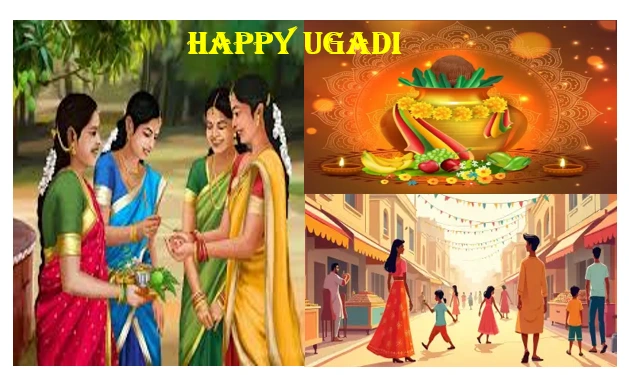
Ugadi is the New Year in South India on 19th March 2026. Andhra Pradesh, Telangana and Karnataka all celebrate Ugadi as their traditional New Year. The lunisolar Hindu calendar says that the festival usually happens in March or April. It means that spring has come and a new year has begun. The Sanskrit words Yuga, which means “age,” and Adi, which means “beginning,” are where the word Ugadi comes from. They all mean the beginning of a new cycle in time.
For a lot of families, Ugadi is not just a day on the calendar. It feels like a new start. People clean their homes, decorate their entrances and there is a quiet sense of excitement in the air. The season itself seems to agree. The air is fresh, trees start to bloom and crops are picked. Everything shows the same idea. Life goes in cycles and each cycle gives us a new chance.
Importance in History and Religion
Hindus believe that Ugadi is the day when Lord Brahma started making the universe. This connection gives the festival a spiritual depth that goes beyond just having fun. It implies that every year reflects that initial act of creation. A new start is not just a symbol. It is holy.
The festival also fits in well with the rhythms of farming. It comes when farmers are getting ready for the next stage of planting and the fields have given up their crops. In that way, Ugadi honours both the beginning of the universe and hard work on Earth.
Families get up before the sun rises on the morning of Ugadi. After the ritual baths, mango leaves are tied across doorways to decorate homes. Bright colours are used to draw rangoli patterns at the entrance. These gestures are not hard to do, but they mean a lot. They stand for wealth and bring good energy into the home. Putting on new clothes makes you feel like you are starting over and going to the temple and praying shows how thankful you are for the past year.
Read also: Observing Papmochani Ekadashi and Meena Sankranti 2026
What Ugadi Pachadi Means
Ugadi Pachadi is an important part of any conversation about Ugadi. This traditional dish is a perfect representation of the festival in one bowl. Six ingredients are used to make it including neem flowers, jaggery, tamarind, raw mango, salt and chilli.
Every flavour has a meaning. Neem is bitter and represents hard times. Jaggery is sweet and stands for happiness. Tamarind adds a sour taste, which is a reminder of things that do not go as planned. Raw mango has a sour taste and makes you think of new things. Salt stands for balance, while chilli stands for strength and even anger. When you put these flavours together, they make a mixture that feels both complicated and whole.
Community events and cultural vibrancy
People in South India and in communities around the world celebrate Ugadi with warmth and excitement. Music, dance and poetry are all part of cultural programs. Families get together for big meals made with fresh, seasonal foods. People share a lot of special sweets.
Saying hello to each other makes relationships stronger. Elders bless younger family members, which helps keep respect and tradition alive. Literary events that celebrate the area’s rich history are common at public events. The festival is no longer just a personal event but it is also a community event.
A new level has been added by modern technology. Video calls help families who live far apart stay in touch. Social media feeds are full of messages of thanks and renewal. The heart of Ugadi is still the same, even in the digital age. It is about making connections, thinking about things and having hope.
Read also: From Fasting to Feasting: Eid al-Fitr
A Party for New Beginnings and Hope
People remember that time goes in cycles during Ugadi. Beginnings come after endings. After loss, there may be growth. The food, the rituals and the time spent together all send the same quiet message. Take what comes. Be brave and move forward.
A lot of people take a moment to set goals at the start of the new year. Some people think about their own goals. Some people work on building stronger relationships or learning to be more patient. You do not have to do big things for the festival. It just asks for awareness.
Ugadi brings families and communities together to celebrate renewal through its traditions and symbols. It makes you feel hopeful without ignoring the facts. Above all, it gives us hope that every year brings a new chance to learn, grow and start over.
