


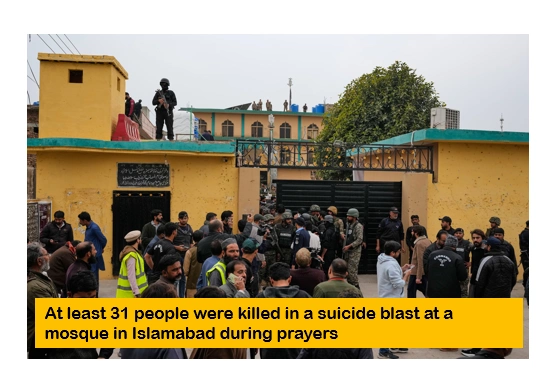
Islamabad’s revered Friday prayers were violated this week with a horrifying suicide bombing that has rocked the community to its core in the days which have followed and sent shockwaves across the nation. As worshipers had massed for one of the most tranquil times of their week, an explosion tore through the mosque, killing at least 31 people and wounding dozens more. If you follow the news, then you know that since then Islamic State (IS) has taken credit for the atrocity and we have resumed talking about security, resilience and the immeasurable human price of extremist violence.
But beneath the headlines and mounting death toll, there are stories of personal loss, heroism and a city facing down a nightmare it had assumed was behind it.
The Moment the Peace Broke
There’s a certain rhythm to Fridays in Islamabad. The streets quiet, businesses come to a standstill, and the call to prayer rings in the air. At the mosque, hundreds of men and boys pressed shoulder to shoulder, a congregation as much emotional as an expression of unity and spiritual devotion. Witnesses said it was peaceful until the crash.
It was an explosion near the front of the prayer hall and appears to have been carried out by someone aiming for the members of the congregation in their most vulnerable position — while they were prostrated. Survivors describe a deafening roar and a blinding flash followed by an instant sheet of choking dust and smoke.
The next I was being blown toward the back wall,” said Ahmed, a local shopkeeper who survived with minor shrapnel wounds. “And then when the ringing in my ears stopped, all I could hear were the cries for help. The white marble of the floor was no longer white.
The Aftermath: A Town in Mourning
The instant reaction was chaotic blend of terror and heroism. Fearing a second bomb, long used by terrorists to maximize casualties in such attacks, local residents and uninjured worshippers returned to the smoke of their own volition to go back inside and pull victims from the wreckage.
The scene was gruesome for emergency services. Ambulances crisscrossed the narrow streets around the mosque, with their sirens wailing in constant refrain to the unfolding tragedy. Hospitals across Islamabad were put on high alert and staff members had to work double shifts to accommodate the desperately injured.
The Human Cost at a Glance
- Casualties: 31 confirmed dead, with more expected as several remain in critical condition.
- Demographics: The victims range from elderly community leaders to young children who had gone with their fathers for prayers.
- Infrastructure: Major structural damage to the mosque’s prayer chamber and entrance.
You can feel the city’s grief. Funerals started almost as soon as they died, in accordance with the Islamic faith. Each coffin on the streets symbolises a father, a son or a friend who had his life cut short at one of the places where he should have been safest.
A Call for Lasting Peace
The world discussion, now that the dust has settled at the Islamabad mosque, is all again about stamping out extremist ideas. It is a reminder that peace is delicate and calls for continual nurture. The 31 who perished were not just numbers in a war; they were the pulse of a town.
The mosque will be repaired in time. The walls will be repainted, and the carpeting redone. But the city is unlikely to forget those who were lost Saturday night; their memory will be written into the soul of New Zealand—giving a lasting note of sadness to a day that started in prayer and ended in a horror the world must not forget.
