


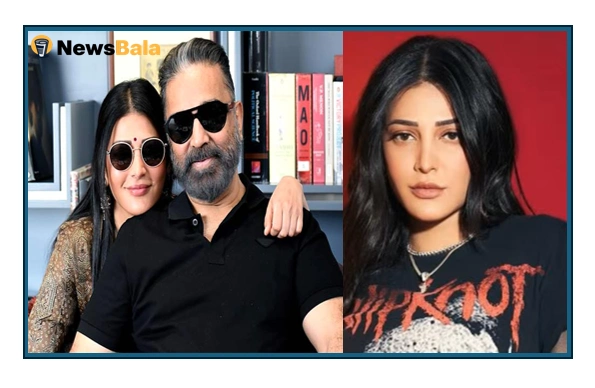
Shruti Haasan, who is both an artist and musician, recollects her experiences from childhood that formed her perceptions of life. Throughout her youth, she experienced the absence of faith in her home. In addition to revealing her father (Kamal Haasan)’s dislike for her talking about faith in public, she adds that her family (to include her dad) made it even harder to talk about faith because there was no “traditional” spiritual practice within the home.
A childhood marked by creativity, not rituals
As an artist, she experienced no traditional spirituality growing up. Even though her parents participated in various forms of artistic expression, they did not follow the standard rules of spiritual practices, nor did they believe in them. Her experience growing up in a family without a spiritual anchor helped shape her views on how art can be a form of spirituality. “Growing up with two very artistic parents made my childhood experiences different than those of most kids in our culture,” says Shruti Haasan. She has spent most of her youth working as an artist or musician on film sets and has therefore had a very different experience than most kids who have a faith-based background.
Father’s Perspective: Atheism and Rationalism
Kamal Haasan has been known for many years to be a rational, logical thinker; he prefers to do things according to evidence and reason rather than by faith or belief in a higher power. He does not enjoy discussing astrology or religious matters at family gatherings. He has also allowed his daughter, Shruti, to explore her interests and life as she pleases, yet he becomes annoyed by her use of the term “atheist” in general and especially when it comes from a public platform.
Shruti’s own spiritual exploration
Despite being raised in an environment where religion and spirituality weren’t practiced or discussed regularly, Shruti does have her own belief system as an adult. In past interviews, before coming out publicly with her own spirituality, she expressed interest in Wicca and Pagan philosophies (earth-based spiritual practices based on women’s energies and connection to ancestors). Her beliefs do not necessarily align with her father’s stance, as Wicca and Pagan beliefs are not necessarily in line with traditional religions or her father’s atheistic view. In fact, Shruti’s favorite quote sums up the way she views her spiritual relationship to her ancestors through a feminist perspective: “We are the granddaughters of the witches you couldn’t burn.”
Over the years, Shruti has reported that, as a child, she was intuitively drawn towards faith and would sit near places of worship for the sake of being able to see how people practiced their spirituality even if her parents were atheists.
Balancing personal beliefs and public identity
While Shruti has become one of the most well-known actors in Tamil, Telugu, and Bollywood films, she provides an illustration of how people’s beliefs can differ in the same family when growing up. Growing up, Shruti’s family did not practice any type of religion; however, she created her own composite of spirituality through creative self-expression and philosophical exploration. Her reflections have generated interest both because they are counter to what might be assumed regarding religion in India and also show the many ways public figures engage with faith in their daily lives.
Soha Ali Khan Reveals Her Supplement Kit to Manage Perimenopause
