


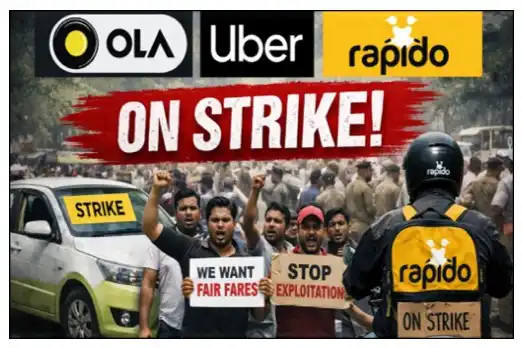
On Saturday, February 7, 2026, drivers from major online ride-hailing companies like Uber, Ola, and Rapido will go offline in a country-wide strike against their poor working conditions, low wages, and unfair regulations. This protest, called the “All India Breakdown,” is predicted to shut down taxi, auto-rickshaw, and bike-taxi services for at least six hours in many cities.
‘All India Breakdown’ — Core Grievances Behind the Protest
According to the Telangana Gig & Platform Workers Union and supporting labour unions, drivers experience declining income, a lack of minimum fare enforcement, and no suitable means to transparently determine fare pricing. Without a government-mandated minimum fare system, each company creates its own fare structure at the expense of drivers, which has resulted in drivers having no certain and dependable or secure way to generate income.
The unions’ principal demands are:
- Immediate notification of minimum fares for app-based services (e-.g., ride-hailing services such as cabs; autos; and bike taxis)
- Clear regulatory oversight according to the Motor Vehicle Aggregator Guidelines 2025
- Protection from arbitrary fare setting; and to the potential for their exploitation as drivers.
As of writing, the unions have sent a letter to the Union Minister of Road Transport and Highways, requesting that the government respond quickly and effectively to these important issues.
Also read:
- Food menu of India’s first sleeper train revised
- PM Modi hails Beating Retreat 2026 performances
- Major delivery aggregators agree to remove 10 minute delivery deadline
What Should Commuters Expect?
Commuters who rely on ride-hailing apps on 7 February should prepare for alternative transportation options, as there may not be access to ride-hailing services during the day or at peak morning and evening hours if drivers are participating fully in the strike.
Industry and Broader Gig Worker Context
This event follows past demonstrations by gig economy workers (including food deliveries and rapid commerce employees) in response to lower payments and difficult working conditions. As a result, ride-hailing platforms have become recent targets of increased scrutiny and demands for better protections or equitable wages.
