


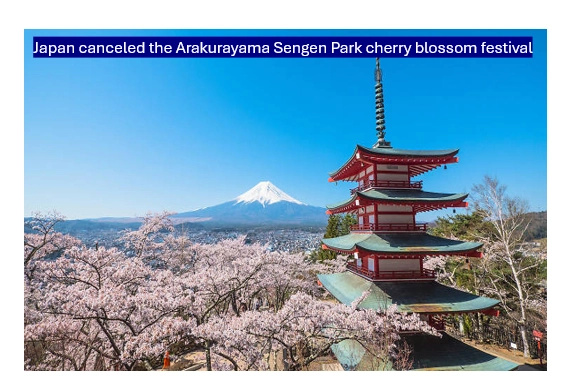
In the shadow of the world’s most famous volcano, a different sort of eruption has taken place — one of civic frustration and social fatigue.
The city of Fujiyoshida, which is home to the towering Arakurayama Sengen Park and was served as the stop’s backdrop, revealed this week that it will “end” its ten year old Cherry Blossom Festival for good. To the 200,000 international tourists who crowd it each year, which previously had all served to heighten the heat and chaos on its streets.All of that phrase here.boasting has served only to escalate its levels of heat and mayhem on the streetsthe decision was a shock. The postcard-pretty sight of pink blossoms against the snow-topped peak of Mount Fuji has brought a far grimmer reality for local residents, who say their privacy and peace have been eroded nearly to nothing.
“Behind the beautiful scene on Mount Fuji lies the truth that lies of quiet citizens are being threatened,” Mayor Shigeru Horiuchi told reporters. “We have determined to stop the festival in order to protect the dignity of our people and their living environment.
When a “Secret Spot” Becomes a World Stage
The Arakurayama Sengen Park Sakura Festival was started a decade ago in hope and has since grown. The city hoped to divert tourists from the congested streets of Tokyo and Kyoto who might fan out to share the majestic vista across at the five-story Chureito Pagoda.
The plan worked too well. Buoyed by the virality of Instagram and TikTok, the park’s view proved to be the defining image of “Spring in Japan.” But by 2025, the daily count of people who visited during peak bloom had swelled to more than 10,000. With the Japanese yen at historical lows, the floodgates opened and a town of just 45,000 people began to crumble under the weight of an entire world’s demands.
The Human Toll: Crossing and Losing the “Home”
Though “overtourism” is most frequently talked about in the sense of hotel availability and airport queues, here — in Fujiyoshida — it’s visceral and intimate. The city’s official announcement unveiled a long list of abuses that have left the community stunned.
Residents say visitors walk into their personal homes, knocking or not, to look for a restroom. Others have discovered strangers sneaking into their backyards for a slightly better camera angle, and more disturbingly, there have been reports of tourists urinating or even defecating in private gardens after public facilities — overwhelmed by the crush of humanity — became inaccessible.
“This is not just the littering and noise,” one shopkeeper near the park’s entrance said. “This is about the sense that your home isn’t yours anymore. You wake up and there’s a stranger in your yard, or you see somebody saying something to an old neighbor because they’ve been asked to leave them private property. The respect that is so deeply ingrained in Japanese culture has been overlooked by those seeking the ‘ultimate photo’. “
Read also: Japan’s Foreign Minister rides Delhi Metro
Safety in the Streets: A Crisis in Waiting
But it is perhaps the children in the town who feel the cancellation’s cold weight more than anyone else. The narrow residential streets in Fujiyoshida were not made to accommodate thousands of pedestrians and tour buses at once.
Parents have expressed increasing concern over the safety of their children’s daily trip to school. Triplified tourists crowd sidewalks at crush-level during peak blossoms, often pushing students into oncoming traffic. Schools in Bradford reported how children are being made to run a “gauntlet of strangers” just to get into their classrooms, while many staff have faced visitors getting aggressive or dismissive when asked to move.
