


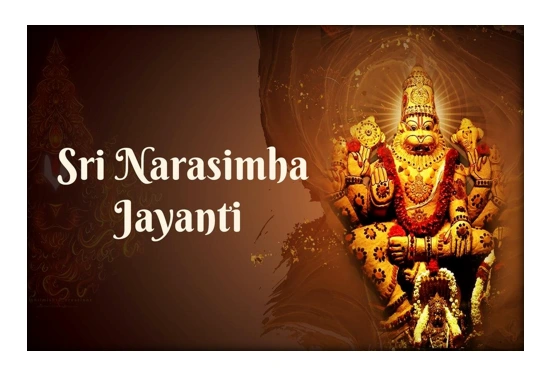
The day of Narasimha Jayanti, which is celebrated on April 30, 2026, is a spiritual celebration of the appearance of Narasimha, the fourth incarnation of Lord Vishnu. It represents an important part of the history of the world and is a significant day for followers of Lord Vishnu, as it represents the ultimate victory of righteousness over evil, and also shows how God protects those who are true in their devotion.
Significance of Narasimha Jayanti
Narasimha Jayanti is observed as a consequence of the tale of Prahlada and his wicked father Hiranyakashipu. The tyrant, Hiranyakashipu believed he was indestructible and thus forbade his people from worshipping Vishnu while Prahlada continued to worship him faithfully. Lord Vishnu appeared as Narasimha (a half-man/half-lion) during the twilight hours (when it is neither day nor night) and at the entrance of a house (neither indoors, nor outdoors) to kill Hiranyakashipu in order to maintain his promise to destroy his father’s enemy without violating the terms of the boon granted by Hiranyakashipu.
Narasimha Jayanti is a testament to the significance of having faith in God; to the inherent divine justice in our universe; and that God will always protect a devotee who has sincere devotion. The symbolism associated with Narasimha Jayanti includes courage, loyalty to God; and defeating one’s ego and negative characteristics.
Rituals & Observances
Devotees begin their Narasimha Jayanti by completing purification rituals, i.e., snan, dressed in clean or traditional clothing. Devotees fast (vrata) until the Lord Narasimha manifests that same day in the evening.
Lord Narasimha will be worshipped throughout the ten days by offering him different types of flowers, fruits and sweets. Devotees will conduct special pujas using mantras, aartis and bhajans (sacred songs) to honour him, as well as reciting the Narasimha Katha (the story of Narasimha). Many devotees will visit temples (which are usually either dedicated to Vishnu or to Narasimha) and take part in elaborate rites and bhajans in honour of Narasimha. Some areas will have performances of the Narasimha & Prahlada story.
Devotees all over the world will observe the Holi Festival in a similar devotion; however, specific observances differ. Many ways to celebrate include:
- Fasting & Praying: Observed in either a strict or partial manner, while performing meditation and chanting.
- Visiting Temples: Participating in special events and receiving blessings.
- Charity / Service: By donating to the needy, including food, clothing and/or money; thereby displaying compassion and humility.
- Gathering Together: By singing bhajans, sharing food (prasad), and organising spiritual discourses.
- Reading Scriptures: By reciting the story of Narasimha from sacred texts such as the Bhagavat Purana.
Read also: 13 April: varuthini Ekadashi, Vallabhacharya Jayanti
Recommended Mantra
A widely chanted mantra on this day is:
“Ugram Viram Maha Vishnum
Jvalantam Sarvato Mukham
Nrisimham Bhishanam Bhadram
Mrityur Mrityum Namamy Aham”
This mantra invokes the fierce yet protective form of Narasimha, seeking courage, protection, and removal of fear.
Do’s:
- Fasting is very important to follow with discipline and true intent.
- Clean your body and your surroundings;
- Pray or chant the entire day;
- Show your dedication to God through acts of devotion and humility, and be focused on growing spiritually;
- Help out others in need (especially those who are poor).
Don’ts:
- Avoid eating any meat or drinking alcohol;
- Do not put yourself in situations where you have anger or get into arguments with negative attitudes;
- Do not break your fast until you complete all rituals associated with it;
- Do not show disrespect to the traditions and beliefs associated with your culture or religion (i.e., do not engage in violence, mentally or physically).
Read also: 27 April 2026: Mohini Ekadashi, Siddhilakshmi Jayanti
Conclusion
Narasimha Jayanti is more than just a day to follow the practices of the religion but should serve as a reminder of our divine protection and strength to do the right thing. Through performing the prescribed rituals, chanting the mantras prescribed by Narasimha, and living according to the principles that Narasimha represents, many devotees will find both spiritual fulfillment and inner courage.
