


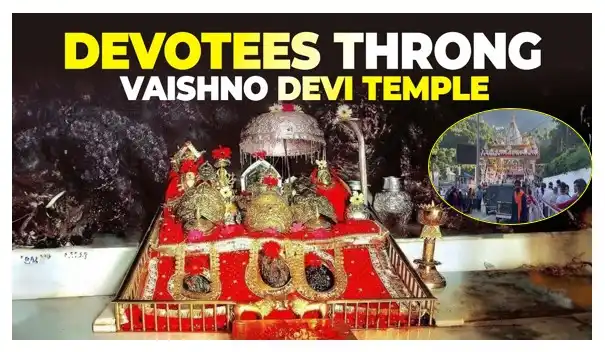
And now, as the sun comes up between the Trikuta Hills, the air in the base camp of Katra is not merely thin and cool; it is heavy with incense, much with rhythmic hymns, and an indescribable exuberation with which only a festival like Navratri can impregnate. We have also seen a phenomenal influx of faith this year with even more than 2 lakh believers taking the tedious but heart throbbing journey to the sacred Cave of Shri Mata Vaishno Devi during the first few days of the festival.
What started as a flow of pilgrims on March 19, has turned into a huge river of humanity. The old man leaning on his wooden staves, the baby that is held in the brawny hands of “Pithoos,” all these people, say they are manifold and they all give one tale; in the very midst of the Trikuta mountains, it is a prayer in every stride.
Dealing with the Devotion Code Red
The number of pilgrims was so high during the weekend that the Shri Mata Vaishno Devi Shrine Board (SMVDSB) was compelled to make a painful but a needed choice. On a Saturday evening (when a daily footfall reached 40,000), the authorities briefly halted the registration of yatra.
This interim action was designed to prevent an overcrowding of the Bhawan complex, around the holy cave, which would have exposed the people in a risky situation. When thousands of people waited, waiting so long in their hotels and base camps, the chants of the Jai Mata Di were never stopped. The gates were opened again by 4.00 AM the next morning and the spiritual journey was again undertaken in a clear star-studded sky.
We are more concerned with the safety of the people who are worshipping, said a high official of the Shrine Board. We have deployed a powerful, multi-level security and crowd control system, with RFID tracking of each individual pilgrim. This enables us to observe the congestion of the crowd at different locations in the 13-kilometer track in real-time.
read more:
- Air India London Flight Diverted to Jeddah After Technical Snag
- AIU arrests 4 passengers at Chhatrapati Shivaji International airport
- Glass found in NOICE dark chocolate order from Instamart
A Sensory Symphony: Flower, Lights, and Hymns
To people who arrived at the Bhawan, it was almost as heavenly as heavenly. The shrine has been covered with a spectacular cluster of exotic flowers that are brought in not only all around the world but certain regions in India as well. The sweet smell of lilies and marigolds blend with the mountain air, and this exaltation of the senses is what the enthusiasts call indefinable.
The evening Aarti has taken the centre stage of the celebrations. This year the Board has arranged the performances of the famous devotional singers whose voices rebuke the valley and are magnified by the spiritual vibration of the Shat Chandi Maha Yagya a nine day ritual being performed in pursuit of world peace and prosperity.
Stories of Human Boldness and Survival
In addition to the figures, however, it is the single stories that make this Navratri. The devotee to being discussed is a man by name of Sanjeev Kumar who arrived with three generations of his family in Haryana.
We have been coming there every year, says Sanjeev, standing before the Banganga gate. The new signboards and the better facilities make it easier to travel there, yet it all feels the same with being standing in front of the Pindis (the natural rock formations to symbolize the Goddess). It is a scene of complete rest which erases a year of weariness.
The humaniated infrastructure is all over the place. Technology is serving tradition in the Battery car services which help the aged and the differently-abled to the Bhawan-Bhairon Ropeway which completes the one-hour intense climb in a three-minute scenic ride. The Langar Seva (community kitchens) of Tarakote and Sanjhichhat have also increased activities and are cooking thousands of hot, Satvik meals to pilgrims who stand the cold and damp mountain rain and the raw cold.
