


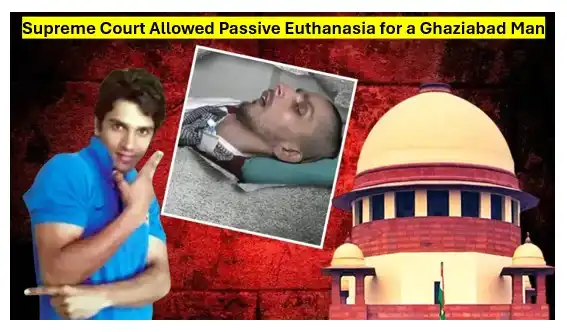
Harish Rana, a man from Ghaziabad who had been in a vegetative state for more than 13 years, was given permission by the Supreme Court of India to end his life. The choice was made after a long judicial and medical study of his case. People all over the country are talking about the decision because it brings up tough issues like pain, respect, and end of life care.
The court allowed the end of treatment that was keeping him alive after looking at the medical records and hearing the parents’ plea. People in India are now talking a lot about this case when they talk about silent suicide and patient rights.
The terrible accident that changed his life
In 2013, Harish Rana’s life took a terrible turn when he fell from the fourth floor of a paid guest lodging and badly hurt his brain. Those were his early school years. He is in a lifelong vegetative state because of the damage the fall did to his brain.
Rana stayed unconscious after the accident and needed medical help all the time. Doctors agreed that he hadn’t shown any real signs of getting better for years. His situation didn’t change even though he was getting care and medicine all the time.
Rana lived for more than ten years with the help of hospital supplies and was helped 24 hours a day. During this long and hard time, his family continued to take care of him.
read more: Hyderabad Doctor’s Rs 50 Crore assets seized by ED in IVF Scam
Parents went to the Supreme Court
After years of seeing their son stay in the same state, Rana’s parents went to the Supreme Court and asked for permission to stop the treatment that was keeping him alive. They said that their son had been in pain for over 13 years because of a problem that could not be fixed and that he had no chance of getting better.
The family says that letting silent suicide happen would help their son regain his respect after years of being powerless. The long term situation had also caused the family mental pain and difficulty, and Rana’s health had not improved.
The court carefully reviewed the case, including medical records and what happened to his health after they requested them.
read more: Everest spices failed quality test found with excess pesticides
The Supreme Court’s Reasons for Making the Decision
Before giving the verdict, Justices JB Pardiwala and KV Vishwanathan looked over the case. The judges saw that Rana had been vegetative for over 13 years and couldn’t talk about her feelings, thoughts, or wishes.
The court said that keeping the person on life support in this situation was very worrying for their respect and quality of life. Withholding or stopping medical care that keeps a person living is what passive euthanasia means. This lets death happen peacefully.
The court allowed Rana to stop receiving medicine that was meant to keep her alive after looking at the medical reports and how long her condition had been going on for.
read more: Drone Strike Near Dubai Airport
What is next for Harish
The order says that medical care can only be stopped if intentionally extending a person’s life won’t make their situation better and is going against their rights to privacy and respect.
For Harish, this means that the PEG tubes that were giving him food and water can now be taken out.
What do the rules say
The Union Health Ministry released a draft of Guidelines for Withdrawal of Life Support in Terminally Ill Patients” in October 2024. These guidelines say that choices like these must be based on a well-thought-out medical opinion.
The written rules say that the removal is subject to four conditions:
- Anyone who has been declared brainstem dead under the THOTA Act
- A health professional’s prediction and opinion that the patient’s illness is advanced and not likely to get better with strong treatment
- The patient or proxy signed a paper saying they didn’t want to continue life support after being told the prognosis.
- Following the steps that the Supreme Court has set out.
