


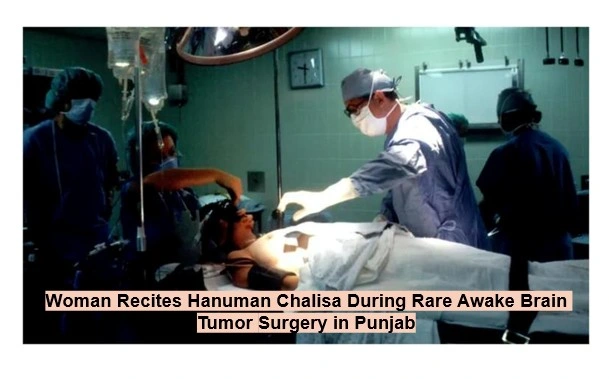
In Jalandhar, Punjab, doctors were able to remove a brain tumor from a 42-year-old woman while she was awake, which is not often done. During a very important part of the surgery, the patient stayed awake and kept singing the religious song Hanuman Chalisa while doctors worked on delicate parts of her brain.
Doctors did the surgery after finding that the tumor was close to parts of the brain that control speech and understanding. The doctors chose to do the treatment while the patient was awake so they could watch how she responded in real time because there was a chance of long-term brain damage.
People are interested in both the treatment itself and the patient’s ability to stay cool and cooperate during the difficult process.
Why Brain Surgery While Awake Was Picked
The neurological surgery team said that the tumor was in a high-risk part of the brain that controls language. Taking it out while under full general anesthesia could have made it hard to speak or understand.
Doctors were able to check the patient’s speech, knowledge, and cognitive reactions while they took out the tumor by keeping her awake. The patient didn’t feel any pain because they were given local anesthesia. Their higher brain processes stayed active.
Surgeons asked the woman to speak and reply several times during the operation. She decided to say the Hanuman Chalisa, which helped the doctors check how clear her speech was and kept her calm during the surgery.
Highlights of the Medical Team Helping the patient
The medical team said that the patient’s cooperation was very important to the process going well. Surgeons were able to find and avoid important parts of the brain while removing the tumor thanks to her steady voice and clear answers.
Neurosurgeons, anesthesiologists, and neurologists must work together very carefully during awake brain surgeries. Any rapid action or lack of contact can raise the risks, so it is very important for the patient to be involved.
Doctors involved in the case said the woman stayed cool and alert during the whole process, even though being awake during brain surgery can be stressful. Her mental attention helped make sure that the tumor could be taken out without hurting her brain.
A quick recovery and a good outcome
After the surgery, the patient was watched closely to make sure her mental state was getting better. Evaluations done after surgery showed that her speaking, understanding, and thinking skills were not impacted.
The hospital said that the woman is doing well and that she will continue to have regular check-ups to see how she is doing. Early signs point to a good result, and there have been no reports of any instant problems.
Family members were happy that the surgery went well and thanked the medical team for planning and carrying it out so carefully. Doctors said that early evaluation and careful planning of the surgery were very important in getting the result.
There is more and more awake cranial surgery in India
Awake brain surgery, also called awake craniotomy, is being used more and more when tumors are close to parts of the brain that control movement, speech, or sense processes. Even though it’s still not common, the method is becoming more popular as technology and medical skill improve.
Medical professionals say that patients are carefully chosen for these kinds of operations based on where the tumor is located, their general health, and how ready they are mentally. Before surgery, the patient gets a lot of information and counseling to make sure they understand what will happen and are okay with it.
The Punjab case shows how modern neurosurgery blends careful technical skill with care that is focused on the patient. By letting patients stay busy during surgery, doctors can lower the chance of long-term damage and make healing go more smoothly.
The doctors involved hope that making people more aware of more advanced surgery choices will encourage them to see a doctor right away if they are having signs like headaches that won’t go away, trouble speaking, or memory loss. They say that early detection is still very important for treating brain tumors successfully.
